Echolalia and Sensory Sensitivities: Creating a world of understanding, empathy, action, and nonjudgement towards the Neurodivergent Community
— Ryan Hill
Introduction:
Echolalia and Sensory Sensitivities? What are they? How are they expressed by Neurodivergent Individuals? How might they define a Neurodivergent Individual’s Identity? Echolalia and Sensory Sensitivities are a common trait in people who identify as being Neurodivergent. They are characterized as behaviors and actions expressed by Autistic and Neurodivergent people based on the environments they live in, interact with, and comprehend. These traits are also defined by how people who identify as Neurodivergent process the world around them and anything that comforts them. These human components for autistic and neurodivergent individuals are unique to those communities and are expressed through certain thoughts and actions. In some cases they can be reactions to how people from those communities process certain aspects of their environment and if any are perceived as overwhelming or overstimulating. Echolalia and Sensory Sensitivities define the ways in, which Autistic and Neurodivergent Individuals process the world through a unique and detailed lens. It allows people from that universe to take in more information at once that others. As a result, people who identify as Autistic or Neurodivergent can feel overwhelmed by certain environmental factors such as loud noises, different kinds of smells, or types of touch that feel tight or compressing.
Echolalia and Autism:
Echolalia is a human characteristic commonly seen in Autistic Individuals. It is defined by repetitive body movements and noises made by such people. These are almost always based on certain life interests, routines that autistic people have, or environments in which are overstimulating or inaccessible. People who identify as Autistic express repetitive thoughts and actions in different ways. These are based on different life interests, activities, people, and actions that make them feel comfortable. This can be characterized by some as being in your zone or safe space. At the same time, echolalia is expressed through the communities in which autistic individuals live in, the places they go to the most, and the life experiences that shape what gives them the most comfort.
When carefully considered, Echolalia can be a helpful form of communication for anyone in the Autistic or Neurodivergent Communities. This can help people understand different parts of one’s personality or complexion that represents their most authentic self. Echolalia can stem from a place of relaxation, control, and self-regulation for many autistic people when moving about their day and from the different environments they may encounter during it. It is a form of communication that should never be changed or discarded by anyone else. People from the autistic community always use it for different reasons. Making them improve upon it would result in part of their identity being erased or set aside. It would never set a good example for how we can truly be inclusive, welcoming, and understanding towards anyone in our community.
As Neurodivergent Insights points out « Echolalia refers to the repetition of words, phrases, or sounds, either immediately or after a delay. It’s often misunderstood as “meaningless,” but for many Autistic and other neurodivergent people, echolalia serves important purposes.
For some, echolalia acts as a bridge to communication — a way to participate in conversation when generating original language in the moment feels effortful. For others, it offers regulation and comfort, helping organize thoughts or soothe the nervous system. Echolalia can also support language processing, allowing someone to rehearse, explore, or integrate meaning through repetition.”
In some ways, Echolalia can be helpful for many Autistic People when needing to regulate or calm themselves in certain life situations. It can help anyone from that community to refocus and prepare for either the next activity or the next part of one. With that mine, Echolalia should come to be valued and respected by other people in any community when it comes to understanding and acceptance of Autistic People.
Autism, Neurodivergence, and Sensory Overload:
Another important neurological component to understand about Autism and Neurodivergence is Sensory Overload. It is defined as overwhelm and overstimulation to different external environments for autistic and neurodivergent individuals. Sensory Overload is always caused by environmental factors that heighten senses for Autistic and Neurodivergent individuals in ways that differ from other people. This characteristic can cause other actions such as meltdowns, shutdowns, stimming, dysregulation, and other behaviors based on how Autistic and Neurodivergent Individuals are perceiving any environment around them. Sensory overload is a situational occurrence that results from environments that have historically not been built for people who are autistic or neurodivergent. It always happens when an autistic or neurodivergent individual’s brain takes in more information than one could process in any situation. That is because people who are identify as such take in more information about their surroundings than neurotypical people do.
Sensory overload can be self-managed by autistic and neurodivergent people using accommodations, environmental adjustments, and understanding from other people. That includes having noise cancellation headphones available, working in more quiet workspaces, having more breaks built into a work schedule, working on school assignments or tests in environments that are away from other students, having quiet spaces or areas to decompress when in loud or overstimulating environments, and allowing for time for people to process information step-by-step when feeling overwhelmed. As the National Autistic Society has carefully listed below: “Self-management and support strategies
Self-management strategies
Keep a sensory diary
Keep a diary to identify patterns in your/your child’s sensory experience, including:
sensory triggers
hyper- or hypo-sensitivities and/or any related behaviours noticed
times of the day you/they experience high or low energy
what helps during sensory overload
what helps with recovery after sensory overload.
The diary may help you to understand your/your child’s sensory profile, so you can answer questions including:
What do you/they need more or less of?
What sensory inputs do you/they like and dislike?
Could routines or scheduling help to manage sensory differences?
What activities calm you/them, and/or help to manage sensory differences?
Autistic people have found these items and activities helpful:
ear-defenders or noise-cancelling headphones (though using these a lot may increase sensitivity over time)
sunglasses or tinted glasses
sensory or ‘fidget’ toys
weighted blankets/vests (the Royal College of Occupational Therapists recommends that an occupational therapist assesses the use of these by adults and children to help you make an informed choice, though they are widely available)
swinging
wobble cushions.
Some autistic people have a ‘sensory kit’ or ‘sensory box’ to gather together the items they use to manage their sensory experience.”
When Autistic or Neurodivergent People are given the resources to deal with sensory sensitivities constructively and deliberately, they can find ways to lead their own lives with care while maintaining their identity as people with naturally differing abilities. Many of these tools and resources serve as coping and relaxation strategies to reduce sensory overload and overstimulation. Autistic or Neurodivergent People always would have plenty of reasons to engage in any behaviors related to sensory sensitivities. They come from their place of comfort or being in the zone to maintain safety. Autistic or Neurodivergent People always come from a place of processing their environment or understanding the world around them when dealing with sensory sensitivities or overstimulation.
Types of Sensory Sensitivities:
There are many different types of sensory sensitivities. They are all related to external environmental factors that people experience everyday or on a regular basis. These environmental factors or situations always result from natural occurrences or features with an environment or setting in any area. The type of sensory sensitivity they could cause for anyone is always the result of the type of situation, area, or place that you are in and the information being given to you. Sensory sensitivities are always the result of being in environments or places that are not always designed or accommodating for Autistic or Neurodivergent individuals. This can also be the result of people being unwilling to make any public place or environment accessible and welcoming for such people. Autistic or Neurodivergent People deal with sensory sensitivities or any kind everyday. They can present life challenges or attributes that anyone from those communities would need to learn to deal with. How we deal with them also comes with understanding and acceptance from people who do not identify as being parts of those universes. At the same time, sensory sensitivities are a topic of expanding knowledge and understanding that should be coupled with emotional intent and action.
When autistic or neurodivergent individuals are dealing with sensory sensitivities, they almost always come with strong emotions. For many people from those communities, they are emotions that they may not always understand for themselves. Such emotions would always result from overstimulation or having too much information taken in at once. Any information being presented to autistic or neurodivergent people could always be about one or multiple topics. As the Dan Marino Foundation has carefully listed: “What sensory sensitivities mean in autism
Sensory sensitivities are differences in how the brain processes sensory information.
This includes the eight sensory systems:
Sight (visual)
Sound (auditory)
Touch (tactile)
Taste (gustatory)
Smell (olfactory)
Movement (vestibular)
Body awareness (proprioception)
Internal sensations (interoception)
When people talk about sensory processing autism, they are often describing how sensory input can feel amplified, unpredictable, distracting, or even painful. Some autistic people are more sensitive to certain sensations, while others seek them out because they help regulation.
A key point: sensory needs are not the same every day. Stress, sleep, health, and environment can change sensory tolerance.
Sensory differences can show up as “too much” or “not enough”
Sensory differences are not only hypersensitivity. They can also include hyposensitivity.
Hypersensitivity (input feels too intense)
Examples:
Lights feel harsh
Noise feels painful or chaotic
Certain fabrics feel unbearable
Strong smells trigger nausea
Busy spaces make it hard to think
Hyposensitivity (input feels muted)
Examples:
Not noticing cold or heat quickly
Seeking strong movement or pressure
Needing louder sound to register it
Craving crunchy or spicy foods for stronger sensation
Both can exist in the same person, sometimes in different senses.
This is why autism sensory challenges can look “inconsistent.” The nervous system is not inconsistent. It is responding to the type and intensity of input in that moment.
What autism sensory overload looks like in real life
Autism sensory overload happens when sensory input exceeds the person’s capacity to process it.
It can build quickly or slowly. Sometimes the person knows it is happening. Sometimes they only realise after they are already overwhelmed.
Sensory overload can look like:
Irritability or sudden emotional flooding
Shutting down (going quiet, withdrawing, losing speech)
Trying to escape the environment immediately
Covering ears, squinting, or pushing away touch
Pacing, rocking, or increased stimming
Headaches, nausea, dizziness, or fatigue
Meltdowns when the system cannot hold it in anymore
A meltdown is not a tantrum. It is a loss of regulation.
Many families notice that overload shows up as “behavior.” But the behavior is often the last stage. The sensory stress started long before anyone saw it.”
Sensory sensitivities can show through three main environmental or external factors related to our senses. These are related to how our body both reacts and takes in any information, places, and experiences around us everyday. They always originate from how our the brains of Autistic or Neurodivergent Individuals work and understand the world around them.
My own experience dealing with Echolalia and Sensory Sensitivities:
As someone who identifies as being Autistic and Neurodivergent, I have experienced both Echolalia and Sensory Sensitivities in my daily life. Both attributes are still true for me as of now. For Echolalia, I would always communicate via key words or phrases from movies, books, tv shows, or plays that I loved and really resonated with. Those words or phrases were always powerful to me and allowed me to relax in any life situation. That included any situation where I was in an overstimulating environment. Repeating any words or phrases allowed me to connect more with my inner world and relate more to the outside one around me. Watching any movie or tv show allowed me to enter into any world where I could be myself, see what it could be for me in the future, and bring it back to the present moment both in words and thoughts. We all have a comfort zone or place where we all go to feel safe anytime. Echolalia can be a comfort space for anyone who identifies as autistic or neurodivergent with extra layers added. It is broadly larger world where we connect with many different areas all at once.
While I did not always engage in noticeable stimming behaviors, I did engage in ones that involve clasping my hands together or making certain body movements that formed stretching or standing still positions. As a kid, I would always engage in such behaviors when I was in loud or overwhelming environments, when I was in my comfort zone, or when I was thinking about an interest of mine that I really identified with. As I moved through life, I have slowly move past engaging in such behaviors. This was through a combination of masking, personal growth, and shifting interests. Today, I hardly ever engage in any stimming behaviors in public. Whenever I would engage in such behaviors or actions, I would always be by myself in either my bedroom or another part of my house where I can go for privacy.
As someone who specifically identifies as Autistic, I have always found certain loud noises overwhelming to deal with. As a kid, such sounds that were overstimulating included fire alarms, gun shots of any kind, car horns, train horns, boat horns, vacuum cleaners, power and construction tools, fighter jet engines, and other sounds that have a high decibel range. As I have moved from childhood into adulthood, I have since come to tolerate many types of loud noises better. This has largely been through life experience and knowing how loud certain noises would always be. When dealing with any loud noise such as vacuum cleaners, gun shots, or fireworks I would always come prepared with noise cancellation headphones or alternate ear protection. This has included tools such as air pods and ear plugs.
Conclusion:
Echolalia and Sensory Sensitivities are life components that will be true for anyone from the Autistic and Neurodivergent Communities. They are places where we go to help cope and deal with environments and situations that are not always built for us. They represent a part of us that can ultimately bring out our most authentic selves in the end. To understand Echolalia and Sensory Sensitivities is to truly understand the world of the autistic and neurodivergent communities. At the same time, understanding these communities can lead to better action and trust among everyone. Echolalia and Sensory Sensitivities are areas that are not meant to be set aside or misunderstood. While they may not be true for everyone, they represent the life experiences and stories of anyone who identifies as Autistic or Neurodivergent. When learning from those from either one or both of those communities, take the time to really understand any sensory sensitivities that one may have and how it affects their daily life and activities.
Note of Gratitude:
Thank you to everyone who took the time to read this blog. That includes any fellow disability self-advocates, disability rights activists, disability allies, people who run disability organizations and agencies, educators, medical professionals, people from disability communities, people who support disability-run organizations, people who support organizations for disabilities, and those looking to learn more about the world of people with disabilities. Echolalia and Sensory Sensitivities are life components or traits that will always be true for anyone who identifies as Autistic or Neurodivergent. To understand them is to promote full acceptance of both communities. In turn, to both understand and accept echolalia and sensory sensitivities is to help create a more inclusive, welcoming, equitable, and caring world for people from those universes. When reading this article, take the time, to consider how one from either the autistic or neurodivergent communities might view the world around them when experiencing an overstimulating environment. It would never help anyone who identifies from both universes to not believe them when experiencing sensory overload or assuring them that they would be fine when they would not always be. When we make the conversation about and for autistic or neurodivergent people when it comes to their needs, we promote inclusivity and acceptance to the highest magnitude.
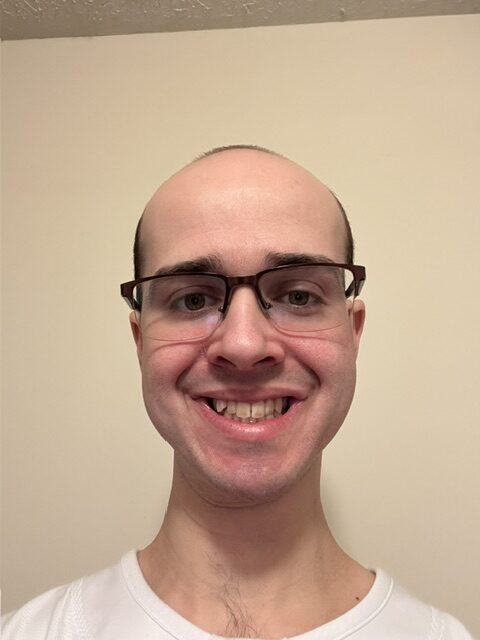
Hello everyone! My name is Ryan Hill. I am currently an Office Services Assistant for a law firm called Holland & Knight in Washington DC. I serve the Office Services Department, which deals with the firms printing and mailing services. My duties and responsibilities there are delivering mail and packages, picking up outgoing mail and packages, cataloging tracking information from packages, preparing postage stamps for outgoing certified mail, delivering print job requests to employees, restocking copy machines with coffee, tea, and other drinks, restocking kitchens with coffee, tea, and other drinks, restocking kitchens and pantries with other kitchen and pantry supplies, restocking kitchens, pantries, and copier stations with office supplies, and always being available to take up any additional work for my department. I started working for Holland & Knight in March of 2025.
Previously, I did vocational training in Business at the Wilson Workforce and Rehabilitation Center in Fishersville, Virginia. At WWRC, I studied and trained in Microsoft Office(Word, PowerPoint, Excel, and Outlook), Business Communications, Customer Service, and Call Centers. I have also had the opportunity to develop and apply many of these same skills through several internships in the area of Business & Administration and Office Support.
I am also a disability and neurodivergent self-advocate. I currently serve on two different disability self-advocacy councils, which represent the disability or naturally differing ability population for Virginia and for the whole country respectively. They include serving on the YET(Youth Empowerment Transition) Council and the YETI(Youth Engagement Transition Initiative) Council. I work with other self-advocates and council members to raise disability awareness and acceptance for other people, help youth with disabilities to become their own best self-advocates, to push for acceptance for more inclusive disability language, to share information about disability resources that people can use to lead successful lives, and to challenge traditional beliefs about people with disabilities. Also, I believe in creating culture that is centered around acceptance with people with disabilities and can lead to laws and policies that uphold that. Additionally, I work with people from other organization to share my story and what it means to be someone who has a disability or naturally differing ability. People with disabilities or naturally differing abilities are also human and are meant to be respected and recognized as everyday citizens too.
Support Us
Your support makes our work possible
As a 501(c)(3) nonprofit organization, The Arc of Northern Virginia relies on private support from individuals, corporations, organizations, and foundations to fund our efforts. Your generous donations help make it possible for us to provide programs, services, and advocacy so that people with IDD can live “A Life Like Yours.”