Introduction: The Question Beneath the Question
Few questions reveal more about a society than the criteria it employs when deciding who deserves investment. Although discussions surrounding funding, accommodation, healthcare, education, employment, and public infrastructure are often framed as practical concerns, they frequently conceal a more fundamental inquiry: Whose lives are considered valuable enough to warrant collective support?
The language of investment is rarely neutral. Embedded within it are assumptions regarding productivity, independence, reciprocity, and social utility. While policymakers may speak of efficiency, employers of performance, and institutions of outcomes, these conversations often orbit an unspoken center, the measurement of human worth.
Within disability communities, this phenomenon is neither abstract nor theoretical. It is experienced in the everyday negotiations of access requests, benefit eligibility determinations, healthcare encounters, educational accommodations, and employment opportunities. The disabled person often encounters a recurring expectation: before receiving support, they must demonstrate why they are worthy of receiving it.
This expectation deserves scrutiny.
For beneath the administrative procedures, beneath the economic calculations, and beneath the rhetoric of scarce resources lies a philosophical question that has shaped societies for centuries: Must a human being earn the right to matter?
The Historical Codification of Worthiness
Worthiness has rarely been an individual judgment. More often, it has been institutionalized.
Throughout history, societies have developed elaborate systems for categorizing populations according to perceived value. These classifications have appeared under
different names, citizens and non-citizens, productive and unproductive, dependent and independent, deserving and undeserving, but they have consistently served a similar function: legitimizing unequal distributions of resources.
Disability has occupied a particularly precarious position within these frameworks.
In many eras, disabled individuals were viewed through paradigms of charity rather than rights. Assistance was offered not because access was recognized as an entitlement, but because compassion was selectively extended toward those deemed pitiable. The distinction is significant. Rights recognize inherent dignity; charity recognizes discretionary generosity.
The transition from charity-based approaches toward disability rights movements represented more than a policy shift. It constituted a challenge to the underlying assumption that disabled people must continually justify their existence through demonstrations of gratitude, compliance, or exceptional achievement.
Yet remnants of older frameworks persist.
Contemporary societies often celebrate disabled individuals who can overcome barriers while remaining skeptical of those who require ongoing support. The result is a paradoxical dynamic in which accommodation is applauded in theory but contested in practice.
The historical codification of worthiness may have evolved, but it has not disappeared.
Productivity as a Measure of Human Value
Perhaps no modern institution exerts greater influence over perceptions of worthiness than the labor market.
The dominant economic paradigm frequently equates value with productivity. Individuals are assessed according to output, efficiency, and measurable contribution. Within such frameworks, investment becomes easier to justify when clear returns can be anticipated.
This logic, however, becomes problematic when applied to human beings.
A society organized around productivity metrics inevitably encounters populations whose contributions cannot be neatly quantified. Disabled people often find themselves positioned within this tension. Their value may be assessed through deficit-oriented
lenses that focus on limitations rather than contributions, dependencies rather than relationships, accommodations rather than possibilities.
The consequence is not merely economic exclusion. It is existential marginalization.
When productivity becomes the primary metric of legitimacy, those whose lives diverge from normative expectations may find themselves continually defending their place within the social order.
Disability justice scholars have long challenged this framework by arguing that human dignity cannot be contingent upon economic output. Such critiques do not reject work or contribution; rather, they reject the assumption that contribution is synonymous with wage labor.
Caregiving contributes. Community building contributes. Advocacy contributes.
Survival contributes.
The maintenance of social cohesion itself constitutes a form of labor, even when institutions fail to recognize it as such.
The Phenomenology of Conditional Belonging
To understand worthiness solely as a policy issue would be insufficient. It is also a lived experience.
The phenomenology of disability often includes recurring encounters with conditional belonging. Access may be granted, but only after explanation. Accommodation may be provided, but only after documentation. Support may be offered, but only after justification.
Over time, these interactions accumulate.
The disabled individual learns that participation frequently requires disclosure. Disclosure invites scrutiny. Scrutiny demands evidence. Evidence becomes a prerequisite for recognition.
Although each interaction may appear minor in isolation, together they create an environment in which belonging feels perpetually contingent.
Many disabled people become intimately familiar with this dynamic. The question is rarely posed directly, yet its presence is unmistakable:
“Why should we invest in you?”
Whether expressed through bureaucratic procedures, social skepticism, or institutional gatekeeping, the inquiry remains remarkably persistent.
The emotional burden is not simply the effort required to answer the question. It is the realization that others are seldom asked to answer it at all.
Personal Reflection: Existing Beyond the Ledger
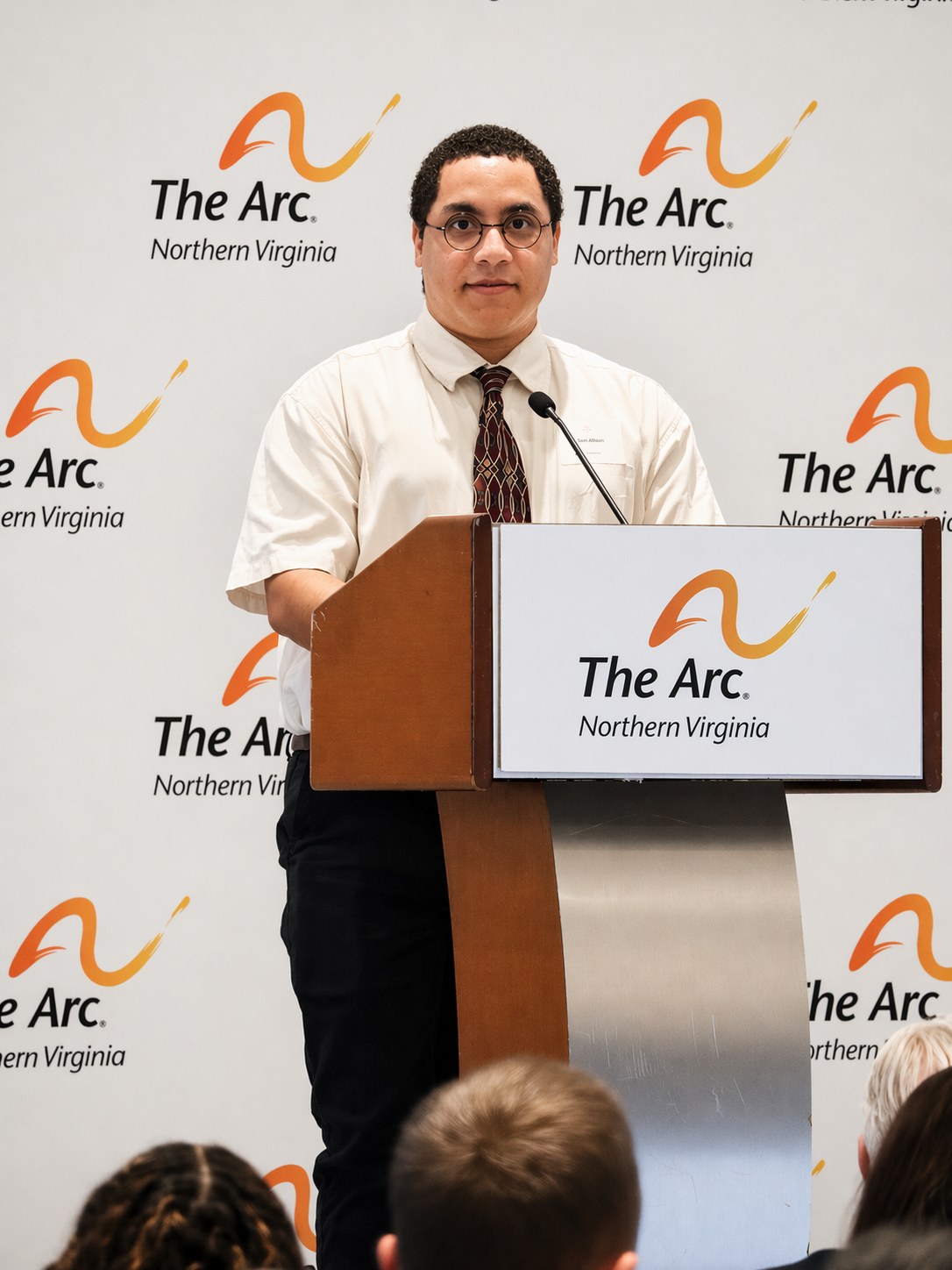
As a disability advocate, I have spent considerable time navigating systems designed to evaluate eligibility, need, and legitimacy. Some interactions have been constructive; others have revealed assumptions that were never explicitly articulated but nevertheless shaped outcomes.
I have often found myself reflecting on how frequently disabled individuals are expected to present narratives that make them intelligible to institutions. We learn to explain our support needs. We learn to justify accommodations. We learn to translate lived experiences into administrative language.
In many respects, advocacy itself can become an exercise in translation.
Yet there have been moments when I questioned the premise underlying these exchanges. Why must dignity be converted into documentation? Why must access be defended as though it were an extraordinary request rather than a fundamental condition of participation?
These reflections emerged not from resentment but from observation.
The longer I engaged with disability advocacy, the more apparent it became that many barriers were not the consequence of individual prejudice. Rather, they emerged from deeply embedded assumptions regarding independence, normalcy, and value.
What appeared to be isolated encounters often reflected broader social architectures. The issue was never merely whether support would be provided.
The issue was why support required justification in the first place.
The Hegemony of Independence
Among the most influential assumptions shaping contemporary disability discourse is the idealization of independence.
Independence is frequently treated as the apex of human development. Educational systems reward it. Employment systems prioritize it. Social narratives celebrate it. Public policy often presumes it.
Yet this celebration obscures an inconvenient reality: human beings are profoundly interdependent.
No one exists in isolation.
Communities rely upon caregivers, educators, healthcare professionals, transportation workers, family members, neighbors, and countless forms of mutual support that remain largely invisible until absent.
Disability exposes this reality with unusual clarity.
What disability communities often reveal is not an exception to human existence but a more visible expression of conditions that apply universally. Dependence is not the opposite of humanity; it is one of its defining features.
The hegemony of independence therefore deserves reconsideration.
If all individuals rely upon networks of support, then the distinction between “independent” and “dependent” becomes less a natural fact and more a cultural narrative.
The question shifts accordingly.
Rather than asking who deserves support, perhaps societies should ask how support systems can be organized equitably for everyone.
Investment as Collective Access
A disability justice framework invites a reimagining of investment itself.
Under conventional paradigms, investment is often viewed as a transaction. Resources are allocated with the expectation of measurable returns. Success is defined through efficiency, productivity, and growth.
Disability justice proposes a broader conception.
Investment can also be understood as the cultivation of collective access. Accessible transportation benefits more than disabled people.
Inclusive communication benefits more than disabled people. Public-private restrooms benefit more than disabled people. Flexible workplaces benefit more than disabled people.
Universal design benefits more than disabled people.
When viewed through this lens, disability-related investments cease to be special accommodations granted to a minority. They become infrastructure supporting the flourishing of entire communities.
This shift represents a profound departure from worthiness-based frameworks. Access is no longer contingent upon proving value because access itself becomes a public good.
The focus moves from deservingness to participation.
The Interstices of Recognition
Perhaps the most revealing insights emerge within the interstices between policy and experience, between rhetoric and reality, between formal inclusion and substantive belonging.
Institutions increasingly embrace the language of diversity and inclusion. Yet inclusion often remains incomplete when it is not accompanied by structural transformation.
Recognition without redistribution can become symbolic. Visibility without access can become performative.
Representation without participation can become hollow.
The challenge facing disability advocacy is therefore not merely securing recognition but reshaping the underlying assumptions that determine whose needs are considered legitimate.
This work requires patience, persistence, and intellectual rigor.
It requires questioning paradigms that have become normalized through repetition.
It requires identifying forms of exclusion that remain hidden within ostensibly benevolent systems.
And perhaps most importantly, it requires resisting the temptation to replace one hierarchy of worthiness with another.
Toward a Society Beyond Worthiness
The aspiration of disability justice is not to demonstrate that disabled people are worthy of investment.
That argument, although often strategically necessary, inadvertently accepts the premise that worthiness must first be established.
A more transformative approach rejects the premise altogether. Human beings possess value independent of productivity.
Human beings possess dignity independent of economic utility.
Human beings possess legitimacy independent of institutional recognition.
From this perspective, investment is not a reward bestowed upon the deserving. It is a manifestation of collective responsibility within a democratic society.
The question therefore changes.
Instead of asking who deserves investment, we ask what conditions enable all people to participate meaningfully in communal life.
Instead of determining whose needs are legitimate, we examine how systems can accommodate human variation.
Instead of ranking lives according to perceived value, we recognize the shared vulnerability and interdependence that bind communities together.
Only then can societies move beyond the politics of worthiness and toward a more expansive understanding of belonging.
Conclusion: We Happy Few, or We the Many?
The title We Happy Few evokes a familiar social impulse: the creation of an inner circle whose members are deemed worthy of recognition, investment, and support. Yet disability advocacy repeatedly demonstrates the limitations of this framework.
The boundaries separating the included from the excluded are neither natural nor inevitable. They are constructed, maintained, and reinforced through policies,
institutions, and cultural narratives.
Consequently, the question is not whether a select few deserve investment.
The question is whether societies possess the moral imagination to recognize that human flourishing has never been an individual achievement.
It has always been collective.
And when investment is understood not as a reward for worthiness but as a commitment to shared belonging, the category of “the deserving” begins to dissolve.
What remains is something both simpler and more demanding:
A recognition that access, dignity, and participation are not privileges earned by exceptional individuals, but conditions necessary for a just society.
Note of Thanks
My sincere gratitude is extended to the disability advocates, community organizers, caregivers, researchers, educators, public servants, and fellow disabled individuals whose work continues to expand the boundaries of collective access and civic participation.
Many of the ideas explored in this essay emerged not from abstract theory alone, but from ongoing conversations, lived experiences, and shared efforts to create communities in which belonging is not conditional upon conformity. Their contributions, whether visible or unseen, have helped illuminate the complexities of worthiness, recognition, and justice discussed throughout these pages.
May the continuing pursuit of accessibility, interdependence, and human dignity encourage us to build institutions that recognize value not as something earned, but as something inherent.
Ian Allan
Self-Advocate for The Arc of Northern Virginia