— Ryan Hill
Introduction:
Accessibility and Equity? What is it? What does it mean? Why does it matter for the disability community? Accessibility is both a practice and concept by which we open up all pillars and sectors of society to people of all abilities. It defines people by their character and dignity and never by any perceived inabilities. Accessibility is an open door that allows people of any ability to move freely through society and lead their own life as they choose to do. Through that, any opportunity to succeed and live a fulfilling life can be possible for anyone to lead in different ways. The world is huge and beautiful in many ways that shape the way we live. We all deserve to experience it fully no matter how we are born into it. Accessibility is an essential custom that must be used by anyone to ensure that we can all live better lives for each other. It is term that must be incorporated more into governmental and policy decision practices at every level. It must transcend our very vocabulary and thought patterns by how we look and examine the world around us. Accessibility speaks a language that says that no one should ever be held back by any disability, but to only experience it as we would see it individually. What can you do to help make our society more accessible? That is a question that we should both ask ourselves and think about every day.
Accessibility and the disability community:
Accessibility has long been a desire and hope for all of the disability community in the world. Throughout recorded history, society has historically been designed in ways that are not always accessible and open to people in the disability community. That has included any part of society that is economically, socially, physically, mentally, medically, or recreationally set up for people to use anytime. Accessibility is a language and code word that says anyone should always have the opportunity to use any public services, visit any public places, and have the space and confidence knowing that their voices will be heard when making requests for accommodations. People who have disabilities or naturally differing abilities move through the world in different ways. Those individual systems and customs always require having accommodations or adjustments given to ensure that they can be successful in any pillar of society. Accommodations are a gateway to accessing society and using it to your positive advantage for others. They should always be designed in mind in both structure and culture when either constructing new buildings or creating new companies or organizations. When accommodations are always designed in-advance, anyone can use any public place or service for their own benefits and for each others respectively. As the Disability Law Center of Virginia points out:
Title 1 of the ADA – Employment
- Helps people with disabilities access the same employment opportunities and benefits available to people without disabilities.
- Applies to employers with 15 or more employees.
- Requires employers to provide reasonable accommodations to qualified applicants or employees. A “reasonable accommodation” is a change that accommodates employees with disabilities so they can do the job without causing the employer “undue hardship” (too much difficulty or expense).
- Defines disability, establishes guidelines for the reasonable accommodation process, and addresses medical examinations and inquiries.
- Regulated and enforced by the U.S. Equal Employment Opportunity Commission.
Title 2 of the ADA – Public Services: State and Local Government
- Prohibits discrimination on the basis of disability by “public entities” such as state and local government agencies.
- Requires public entities to make their programs, services and activities accessible to individuals with disabilities.
- Outlines requirements for self-evaluation and planning; making reasonable modifications to policies, practices, and procedures where necessary to avoid discrimination; identifying architectural barriers; and communicating effectively with people with hearing, vision and speech disabilities.
Title 3 of the ADA – Public Accommodations and Services Operated by Private Entities
- Prohibits places of public accommodation from discriminating against individuals with disabilities. Public accommodations include privately-owned, leased or operated facilities like hotels, restaurants, retail merchants, doctor’s offices, golf courses, private schools, daycare centers, health clubs, sports stadiums, movie theaters, and so on.
- Sets the minimum standards for accessibility for alterations and new construction of commercial facilities and privately owned public accommodations. It also requires public accommodations to remove barriers in existing buildings where it is easy to do so without much difficulty or expense.
- Directs businesses to make “reasonable modifications” to their usual ways of doing things when serving people with disabilities.
- Requires that businesses take steps necessary to communicate effectively with customers with vision, hearing, and speech disabilities.
- Regulated and enforced by the U.S. Department of Justice.
Accessibility should always be applied to any public place, in any public situation, or for any standard of digital technology. It should never be applied to just one area or set of areas of understanding about public facilities or online electronic resources. Accessibility is not meant to give anyone with disabilities or naturally differing abilities privileges in any situation. It only serves to ensure that we can live similar and fulfilling lives like other people. We share this world with each other. When we know that we can easily open it up, then we will know that we can help each other succeed and have a place that we can all call home.
For the blind community, accessibility always means having access to technology that allows them to read or understand information just as well as other people. Technology gives people in the blind community tools, resources, and essentials that they can use to enter into any public setting and contribute to any section of society. This includes any form of digital technology. Assistive technology for the blind community can come in the form of smart phone settings, smart phone apps, or smart devices. As the American Library Association carefully lists: “Materials and Assistive Technology
- Large-print books and magazines that have a typeface greater than font size 14.
- Braille books and magazines (some with tactile graphics) available on loan from the National Library Service for the Blind and Physically Handicapped (see “Collection Development Resources,” below).
- Combination Print/Braille picture books that sighted individuals and Braille readers can enjoy together.
- Various audiobook formats, such as CDs, downloadable audiobooks, and eBooks.
- Audio-described television programs (formatted to include a narration of events which are happening for which there isn’t a dialogue) and movies on DVD.
Technology is always a must and necessity for anyone in the blind community to use in any public area of society. It is an integral part of anyone’s lives in that community. Anyone who identifies as being part of it would know of it its importance and helpfulness. It is the responsibility of anyone else in this world to not only know, but to take action on deliberately and decisively.
Braille:
For anyone in the blind community, the usage of Braille is always a resource that is helpful for anyone to use. Braille is a system or type of language that allows people who identify as blind to read information using their fingers. It always appears in the form of raised dots, which can be read when someone touches them with their hands. The language comes in different forms of dots, which represent different words that would always appear in the English language. Dots are always contracted to represent different words or letters in words. As a result, they always appear in different shapes. To know, what certain words in Braille are, requires knowing the shapes in, which dots appear. As the American Federation for the Blind points out:
“When every letter of every word is expressed in braille, it is referred to as uncontracted braille. Some books for young children are written in uncontracted braille although it is less widely used for reading material meant for adults. However, many newly blinded adults find uncontracted braille useful for labeling personal or kitchen items when they are first learning braille.
The standard system used for reproducing most textbooks and publications is known as contracted braille. In this system cells are used individually or in combination with others to form a variety of contractions or whole words. For example, in uncontracted braille the phrase you like him requires twelve cell spaces. It would look like this:
you like him

If written in contracted braille, this same phrase would take only six cell spaces to write. This is because the letters y and l are also used for the whole words you and like respectively. Likewise, the word him is formed by combining the letters h and m. It would look like this:
you like him
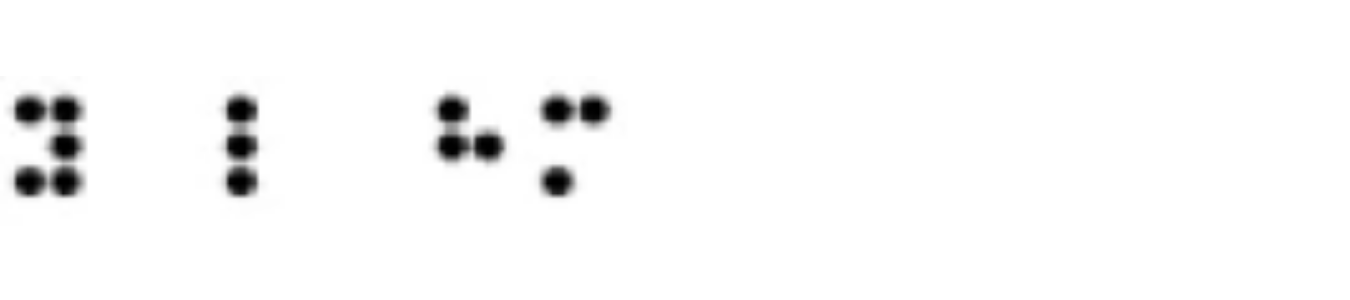
Braille is and will always be an essential form of language for anyone in the blind community to have available. The Americans with Disabilities Act Accessibility Standards mandate that resources like Braille should always be made available in any public building or setting. Any place in society has information or resources that would be desired by anyone to take and use for the greater good of everyone. That includes anyone who learns information through different means.
Accessibility and the Deaf Community:
Accessibility is also important for anyone in the deaf community. Anyone who identifies as being part of that community would always want to make sure to have the right resources available to use to be successful daily. At the same time, accessibility also appears in the form of being understood and valued. The world is always viewed through a unique lens by the deaf community. It takes a concerted and committed effort to both understand and uphold the deaf community in a positive way. That includes either knowing American Sign Language or ensuring hat deaf people always have a sign language interpreter with them.
For the deaf community, accessibility can always appear in the form of sign language interpreters, video captioning, or screen readers. These tools or resources serve as essential accommodations for anyone who identifies as being deaf. They allow anyone from that community to take in important information, to complete different online or physical tasks or actions, or to use different public buildings or services. As Accessibly App has carefully listed: “Navigating Digital Environments
Deaf users also confront challenges when navigating digital spaces, where audio-based information is prevalent. Websites and digital services often lack sufficient text alternatives or captioning, making it hard for the deaf to access the same level of information as hearing individuals. In the context of online work environments, this can manifest as inaccessible video conferencing tools or audio-only training materials.
Key strategies to improve digital accessibility include:
- Closed captioning for videos: Videos must be ADA compliant. Ensure all audio content is accurately transcribed.
- Transcripts for audio materials: Provide a full written account of the spoken content.
- Visual notifications: Use on-screen alerts alongside auditory signals.
- Accessible web design: Follow best practices to make digital content usable for everyone.
By addressing these areas, businesses and service providers can greatly improve the inclusivity and accessibility of their digital offerings for the deaf community.
Technological Solutions for Accessibility
In the domain of deaf accessibility, technological solutions play a pivotal role. They enhance communication, provide greater autonomy, and facilitate access to digital content. This section examines the core elements that drive these advancements.
Assistive Technologies
Assistive technologies (AT) are devices or software that aid individuals with disabilities in navigating the digital world. For the deaf, these include:
- Hearing Aids and Cochlear Implants: These devices amplify sound for those with residual hearing and provide auditory stimulation for the profoundly deaf.
- Video Relay Services (VRS) and Video Remote Interpreting (VRI): VRS allows deaf individuals to communicate with hearing people via a sign language interpreter through video conferencing. VRI, on the other hand, provides on-demand interpreters for live events or meetings without an interpreter physically present.
- Real-Time Text (RTT) Software: RTT enables users to send and receive text simultaneously during a conversation, akin to voice-based communication.
- Captioning and Subtitling Services: Automated or human-generated, these services render spoken language into text, a crucial tool for video content accessibility.
Integration of Sign Language and Captioning
To further support the deaf community, Accessibly integrates sign language interpretation and captioning services within digital platforms. This dual approach caters to various preferences within the community, as some users may prefer sign language while others rely on captioning.
- Sign Language Integration:
- Live interpreters provide real-time sign language translation for video content.
- Pre-recorded sign language videos accompany written content for on-demand access.
- Captioning Services:
- Real-time captioning for live broadcasts and webinars ensures everyone can follow along.
- Accurate and synchronized captions are available for pre-recorded videos, enhancing comprehension.
Any of these resources are always important and necessary for anyone in the blind community to live fulfilling and meaningful lives. They are open doors that speak to anyone from that community that matter just as much as other people in this world do. When we allow people from that community to use any part of society openly and accessibly, we create more opportunities for everyone to live freely and justly.
Sign Language:
For anyone who is part of the blind community, sign language or communication with hands is a huge part of their daily lives. It is a language that allows them to understand any word or phrase that would be used in any spoken dialect. Sign language involves different hand signals and movements that form either different words, phrases, or sentences. These hand signals and movements are carefully learned and understood through daily practice. Sign language is an essential part of the blind community and helps anyone from it to live their own best lives. When practicing accessibility, always prioritize making sure sign language is incorporated into any plan or point of action when interacting with people from the blind community. As NIH carefully lists:
“What is American Sign Language?
American Sign Language (ASL) is a complete, natural language that has the same linguistic properties as spoken languages, with grammar that differs from English. ASL is expressed by movements of the hands and face. It is the primary language of many North Americans who are deaf and hard of hearing and is used by some hearing people as well.
How does ASL compare with spoken language?
ASL is a language completely separate and distinct from English. It contains all the fundamental features of language, with its own rules for pronunciation, word formation, and word order. While every language has ways of signaling different functions, such as asking a question rather than making a statement, languages differ in how this is done. For example, English speakers may ask a question by raising the pitch of their voices and by adjusting word order; ASL users ask a question by raising their eyebrows, widening their eyes, and tilting their bodies forward.
Just as with other languages, specific ways of expressing ideas in ASL vary as much as ASL users themselves. In addition to individual differences in expression, ASL has regional accents and dialects; just as certain English words are spoken differently in different parts of the country, ASL has regional variations in the rhythm of signing, pronunciation, slang, and signs used. Other sociological factors, including age and gender, can affect ASL usage and contribute to its variety, just as with spoken languages.
Fingerspelling is part of ASL and is used to spell out English words. In the fingerspelled alphabet, each letter corresponds to a distinct handshape. Fingerspelling is often used for proper names or to indicate the English word for something.
Sign language comes in many different forms depending on what country you are in. The type of sign language that you would know is one that is based on the spoken language or dialect that is most used in whatever country you live in. When learning sign language, always consider places where it would be most helpful for other people to know about it. This can include any public place or building where people would access essential services. At the same time, sign language must always be prioritized and upheld in practice when interacting with the blind community and ensuring their individual livelihoods.
Accessibility and Neurodivergence
For anyone who identifies as being Neurodivergent, accessibility is always a must when both navigating and moving about the world around them. It can appear in the form of anything regarding learning, sensory sensitivities, diverse ways of thinking, and understanding of how people view the world through unique lenses. Accessibility for the Neurodivergent Community comes with the knowing and thoughtfulness that we all think and feel differently and that our identities shape our realities. We really can be successful and live meaningful and just lives when we are allowed to express our authentic selves gracefully and spiritually.
Accessibility is also about ensuring that Neurodivergent Individuals receive the proper and necessary accommodations for being successful in any public or life environment. These mainly involve adjustments to learning or sensory environments for anyone identifying within that universe. When helping to create accessibility for Neurodivergent people, regular conversations with individuals about their needs and preferences always go a long way. These always start when first meeting Neurodivergent people in public places and during any follow-up meetings. Such meetings or interactions can always take place in areas like school, work, medical settings, public service places, government buildings, recreation areas, nature areas, and any other area that would be used by anyone. As Rice University has put together:
Supporting Individuals
Being prepared to be a respectful and supportive manager, instructor, or colleague to people who identify as disabled and/or neurodivergent is part of our responsibility to fostering an inclusive workplace and positive environment at Rice. Keep the following tips in mind as you work on building your knowledge, identifying and understanding your conscious or unconscious biases, and establishing new practices and norms within teams or the classroom.
- If someone shares their disability or neurodivergence, believe them. Because of microaggressions and discrimination in society, disclosing this information is sensitive. People do not share this information lightly or to get “special treatment”, they share to ensure they get what they need to have equal access.
- Thank the person for sharing and ask them how you can support. If they aren’t sure what they need, offer to work together on identifying simple solutions like being clear about how they prefer to communicate or receive feedback.
- Do a little research and reading about the disability or condition and ideas for supports, do not rely on the individual who shared to educate you. Check out the Job Accommodation Network and their A-Z of Disabilities and Accommodations. Many of the ideas cost nothing and are easy to implement, like frequent and ongoing feedback and positive reinforcement.
- Be consistent working with the individual and checking in. Situations and needs may change. Just because you implemented one idea to support, doesn’t mean that is the end.
Examples of Inclusive Support
Are you supporting/managing a member(s) of your team that have disclosed they have a neurodiverse brain difference? Here are some basic tips from Lizzie Somerfield and Ludmila Praslova:
- Provide context, details, and time to prepare for meetings and discussions.
- Always have a clear agenda and stick to it. Distribute the agenda in advance for participants to plan and understand expectations.
- For virtual or hybrid meetings, normalize having cameras on or off, whichever makes individuals comfortable. Some neurodivergent folks concentrate and process information better when they do not have to worry about masking their stimming or facial expressions, or meeting other neurotypical demands.
- Set clear expectations for individual work output, while giving flexibility on each person’s process for getting there.
- Understand it’s not your job to be the expert on each person’s neurodivergence. It is your job to believe your neurodivergent reports. They will flourish and share their significant strengths with your team with the right support.
Need more help or information? Reach out to the Disability Resource Center to learn about the formal process for employees and students to request formal accommodations.
Accessibility for the Neurodivergent Community is heavily built around creating sensory-friendly environments and technology that helps anyone learn new skills or tasks more easily. In other words, learning new skills or tasks in a way that is geared towards their learning style. When interacting with the Neurodivergent Community, always listen to their needs carefully and uphold their requests for accommodations. Accessibility for the Neurodivergent Community should always be geared towards ensuring autonomy and a positive lifestyle for all neuro pathways in this universe.
Accessibility and Autism:
For the Autistic Community, accessibility should always be placed above anything else when both interacting and serving it. For anyone who identifies as autistic, accessibility comes with a knowing about how anyone’s brains and minds function. This should always include knowing about someone’s sensory needs and sensitivity. Knowing about this, should always come with ensuring that environments or settings are always set up for Autistic people to engage in and not feel overstimulated. It can help with self-regulation and self-control. For Autistic People, sensory needs always stem from how the brain processes both information and environmental factors around them. Sensory processing is the act of taking in both information and environmental factors and understanding what they are from your perspective. For those of us in the Autistic community, we are always processing and taking in information from everything that we experience through our five senses. This is done with a much more intense focus on the world around us.
For those of us who identify as being Autistic, we would always find technology to be useful in any life situation. That include any form of smart devices, smart phone apps, assistive learning devices, and any form technology that could involve visual formats or platforms. Technology can be a driving force for us when it comes to anything in life including independent living, education, work, medical needs, sensory processing, well-being, social life, communication, and life skills. When technology is incorporated into our lives, we will know that we can always live better lives as a result. As Leed Autism Aims carefully lists: When presenting information to autistic people, be mindful that not all autistic people have the same accessibility needs. Some autistic people experience sensory overload more than others and in different ways.
Common causes of sensory overload in autistic people include:
- Too many noises being made at the same time.
- Bright colours or extreme colour clashes e.g. bright yellow on a white background.
- Getting too much information at once.
- Too many things happening in the background.
Many of these apply to websites, printed and digital documents. Some of those examples can also happen in phone calls, video calls and face-to-face meetings.
Verbal information – phone calls, video calls and face-to-face meetings
When speaking to autistic people in person, on the phone or via video call:
- Be clear and concise. Try not to talk too much.
- Use concrete language – say what you mean e.g. “The COVID vaccine comes in two doses.”
- Do not expect the person to maintain eye contact throughout. For some autistic people, eye contact can be quite painful to make.
- Make sure there is little to no background noise when you are speaking. If there is background noise, it can be hard for them to filter out what you are saying.
- For appointments, please give a specific time for when you will speak. Then, the person you are calling will be less surprised and taken aback when you call.
- Find out what works for the person you are speaking to. Give them a choice – video call, phone call, face-to-face meeting or text chat.
- Try not to come across as patronising or condescending when speaking to an autistic person via video call or on the phone. This can be seen as quite offensive by some people.
- If you are going to be late to a meeting, keep the person informed. This is useful in case they are anxious that you won’t be there.
When considering accessible designs for Autistic people, always keep sensory needs and formatting for electronic documents in mind. We all think and process information differently. The way we think and feel the world around us is how we best perceive and view it.
Accessibility and Housing
For the disability community, accessibility is always important when it comes to housing. To live anywhere requires housing structures and buildings to be created with accessible designs. These should include structures or properties that have usable walkways and hallways, sensory-friendly rooms or spaces, braille or sign language resources, sign language services, and digital technology that pre-set up with usable settings. Housing is an essential or vital part of anyone’s lives. When we create reachable and obtainable places, we can all live our best lives both for each other and for ourselves.
Accessibility and Education
For any of us in the disability community, access to education is a must to obtain it successfully. Education is the gateway towards creating a future that anyone would desire. When it is designed and crafted for people of all abilities the whole world will benefit from each other and for itself simultaneously. That includes designing based on people’s learning, sensory, physical, processing, and mental needs. Accessibility is about ensuring that people either can learn or have the right resources to learn successfully in any educational setting. Education is about helping that people with disabilities or naturally differing abilities have the same opportunities to learn, grow, and succeed in an ever-changing world. It should always come with the understanding that everyone learns and processes the world around them differently. The world is ours to discover. It can be learned and explored in anyway that people would best see fit individually. Accessibility can and should always be about ensuring those doors are always open to people of all abilities.
Conclusion
Accessibility will always be an important part of anyone’s lives in the disability community. It comes in many different forms and shapes. Accessibility defines how people of all abilities can use the world around them in their own best way. This always comes with the allyship and acceptance of anyone working with the disability community to ensure equity and autonomy for us in all pillars of society. We deserve to live in a world that is built for all abilities. We are built for how we take in the world best through our own lens. It is the responsibility of everyone in every community in the world to create places that are usable and obtainable for all people to use and share with each other without undue hardship. When we create accessible places in any community, we create more equitable and welcoming societies for all.
Note of Gratitude
Thank you to all for taking the time to read this blog. Accessibility is a key component of creating a more inclusive, welcoming, and caring world for people with disabilities or naturally differing abilities. It comes from a place of empathy and kindness that all abilities matter in this world. When we create attainable and reachable pillars or sectors of society, we say that we all matter and that we have a place to share with each other. Never forget what anyone can be capable of doing or contributing to in our daily world. For my fellow disability self-advocates, now is the time to not only push for more accessible environments, but to protect the ones that we currently have. In a world where our government is trying to undo years of progress on accessibility, we must continue striving to serve each other and everyone who deserves to have their civil and human rights protected at all levels. We must continue pushing and speaking to help create laws and policies that speak the language and essence of accessibility and inclusion for all abilities. It is a responsibility we must undertake every day for others and for ourselves.
Resources:
- https://www.access-board.gov/ada/
- Blindness and Low Vision | ALA Accessibility Resources for Libraries
- What Is Braille? | American Foundation for the Blind
- Accessibility for Deaf and Hard of Hearing: Key Guidelines | Accessibly
- https://www.nidcd.nih.gov/health/american-sign-language
- https://access.rice.edu/supporting-disability-neurodiversity
- https://leedsautismaim.org.uk/resources/guide-to-making-information-accessible-for-neurodivergent-people/