Introduction: The Paradox of Being Present Yet Unseen
There exists a particular form of social absence that is difficult to articulate because it does not involve literal exclusion. A person may enter a room, participate in conversations, contribute ideas, and remain physically present, yet leave with the lingering impression that they were never fully recognized. This experience is often reduced to individual explanations: shyness, insecurity, introversion, or a perceived inability to connect. While these factors may influence social experiences, such interpretations frequently overlook a more complex reality: belonging is not merely an internal feeling but a social condition shaped by expectations, institutions, and cultural assumptions.
To feel invisible at a gathering is not necessarily to be ignored. It is to encounter a space where one’s presence is acknowledged but one’s way of engaging remains partially misunderstood. Invisibility, therefore, is not defined by the absence of attention but by the absence of full recognition. It reflects the gap between being physically included and being meaningfully understood.
For many disabled and neurodivergent individuals, this tension is not an occasional occurrence but a recurring feature of everyday life. Schools, workplaces, community organizations, and social spaces often operate according to unspoken standards regarding communication, participation, emotional expression, and social interaction. These expectations are rarely identified as expectations because they have become normalized. They function as a social architecture, one that determines whose behaviors are immediately interpreted as natural and whose require explanation.
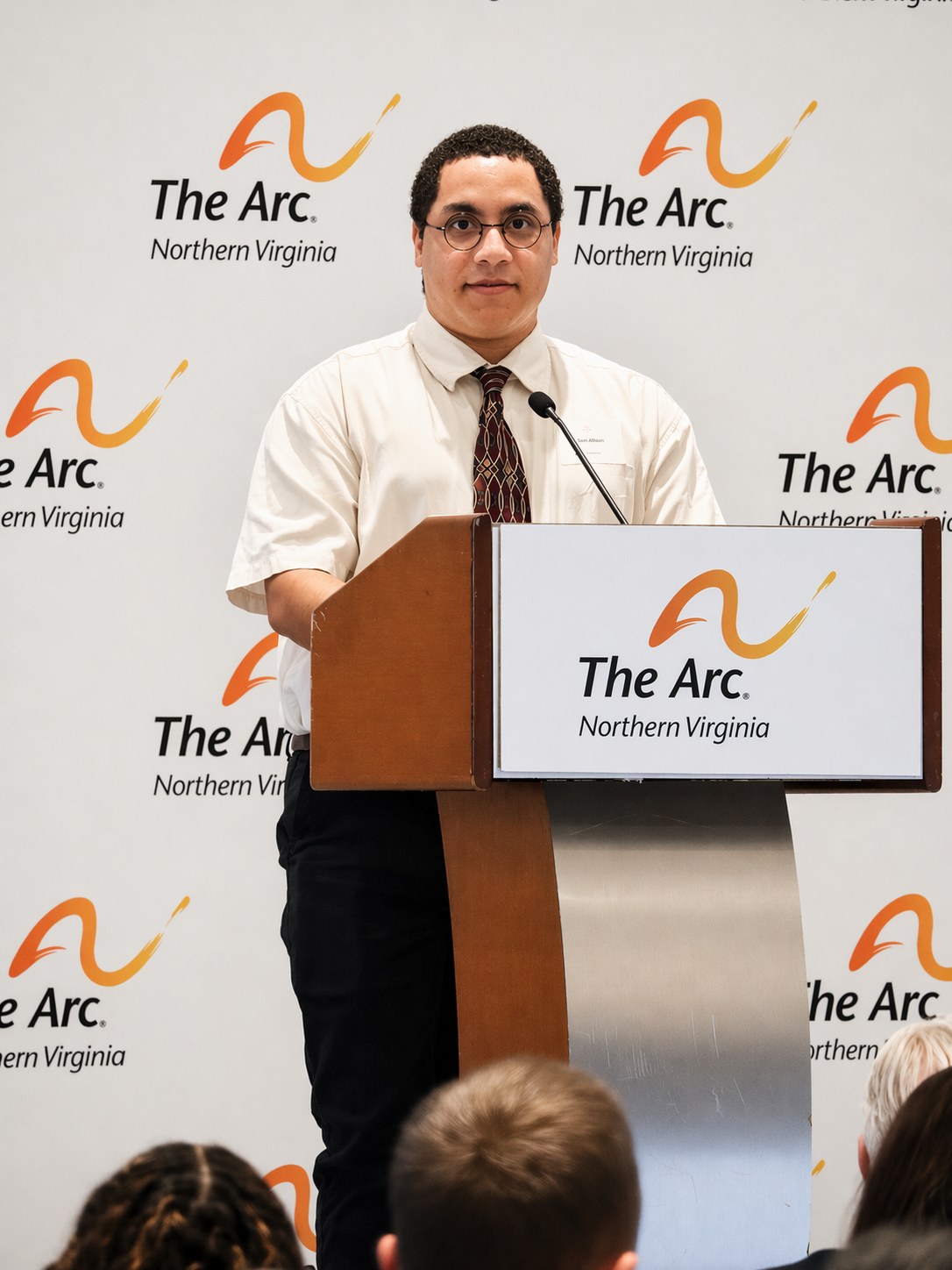
My own experiences as an autistic self-advocate have repeatedly brought me into contact with this reality. I have entered spaces where I was prepared, engaged, and eager to contribute, yet still found myself navigating invisible expectations regarding communication, timing, and presentation. Over time, I began recognizing that these moments were not simply personal challenges. They reflected broader patterns in which belonging itself had been codified around particular ways of thinking, communicating, and participating.
This essay examines that codification through the lenses of disability, neurodivergence, and disability justice. It argues that belonging is not achieved through individual conformity but cultivated through collective responsibility. The question is not merely why some individuals struggle to fit into existing spaces, but how those spaces came to define participation so narrowly in the first place.
Rethinking the Wallflower: The Social Construction of the Outsider
The figure of the wallflower has long represented someone positioned at the edges of social life. Popular narratives often portray the wallflower as hesitant, withdrawn, or lacking confidence. However, this interpretation places the focus almost exclusively on the individual while leaving the surrounding environment largely unexamined.
A person does not become socially peripheral in isolation. Marginality is produced through the relationship between individuals and the environments they enter. When communities establish narrow definitions of acceptable participation, those who communicate, process information, or engage differently may find themselves positioned outside the assumed center.
This reflects a broader pattern of social hegemony. Dominant norms often present themselves as neutral rather than culturally constructed. Particular forms of communication, quick responses, sustained eye contact, spontaneous conversation, visible enthusiasm, are frequently interpreted as universal indicators of competence and engagement. Yet these are not objective measures of human ability. They are socially reinforced preferences that have gained authority through repetition.
For disabled and neurodivergent people, this distinction is significant. An autistic individual who processes information carefully before responding may be perceived as disengaged. A person with a communication disability may be viewed as uncertain despite possessing substantial knowledge. Someone who prefers written communication may be interpreted as less collaborative despite contributing thoughtful analysis.
The issue is not that these individuals lack the ability to participate. Rather, participation has often been defined according to a paradigm that privileges certain expressions of competence over others.
The Codification of Belonging: Neurotypical Norms and Hidden Expectations
Belonging operates through an unwritten social code. Individuals are expected to understand when to speak, how to express interest, how to interpret nonverbal communication, and how to demonstrate engagement. These expectations are rarely taught explicitly; they are absorbed through observation and cultural conditioning.
For neurodivergent individuals, particularly autistic people, these unwritten rules can create significant barriers. Social interaction may require deliberate interpretation rather than automatic understanding. Conversations may involve consciously analyzing tone, timing, facial expressions, and context simultaneously.
This difference is often misunderstood through a deficit-based framework. Instead of recognizing multiple forms of communication, society frequently treats neurotypical communication patterns as the universal standard against which all others are measured.
One consequence of this dynamic is masking; the process through which neurodivergent individuals modify their natural behaviors to align with dominant expectations. Masking may involve rehearsing conversations, suppressing self-regulating behaviors, forcing eye contact, or constantly monitoring one’s presentation.
Although masking can provide access to social and professional opportunities, it also illustrates a larger inequity: disabled people are frequently expected to adapt to environments that rarely question their own assumptions.
The concept of the double empathy problem challenges this imbalance by suggesting that communication difficulties between neurotypical and neurodivergent individuals are often reciprocal misunderstandings rather than failures located within one group. Effective communication requires mutual adaptation, not unilateral correction.
A genuinely accessible society therefore asks not only whether disabled people can navigate existing norms, but whether communities are willing to expand their understanding of communication itself.
The Phenomenology of Invisibility: Seen Without Being Recognized
The experience of disability-related invisibility is complex because it does not always involve exclusion. Often, disabled people are present within spaces but encounter incomplete recognition.
A person may be acknowledged primarily through their disability rather than their broader identity. They may be viewed as inspirational rather than ordinary, accommodated rather than included, consulted rather than empowered.
This distinction reveals the difference between representation and belonging. Representation concerns whether someone is present. Belonging concerns whether their presence meaningfully influences the environment around them.
Throughout my advocacy experiences, I have encountered moments where disabled perspectives were welcomed but not always integrated into decision-making processes. These experiences highlighted the difference between being invited into conversations and being recognized as a contributor to shaping those conversations.
Disability justice emphasizes that lived experience represents a legitimate form of expertise. Disabled individuals possess knowledge derived from navigating systems, environments, and institutions that others may not encounter. Their perspectives are not secondary observations; they are essential forms of understanding.
This is why collective access is so significant. Accessibility cannot exist solely as a response after barriers appear. It must become a shared practice in which communities anticipate diversity from the beginning.
Beyond Inclusion: Collective Access, Interdependence, and Belonging
Inclusion is an important step toward equity, but inclusion alone is insufficient. A person can be invited into a space that was never designed to fully recognize them.
The more transformative question is not simply whether disabled people are present, but whether environments themselves are willing to change.
Disability justice challenges society to move beyond accommodation toward collective access. Collective access recognizes that accessibility is not an individual responsibility placed upon disabled people. It is a communal obligation rooted in respect and reciprocity.
This principle is connected to interdependence, the recognition that all human beings rely upon one another. Although independence is often celebrated as the highest form of achievement, no person exists entirely independently. Every individual benefits from relationships, institutions, infrastructure, and communities.
Disability makes this reality more visible, but it does not make it unique.
An interdependent society does not view support as weakness. It understands assistance, collaboration, and adaptation as fundamental aspects of human life.
This perspective has reshaped my own understanding of advocacy. I once believed belonging would emerge when I became better at navigating environments designed around expectations I did not create. Over time, I learned that belonging does not come from perfect adaptation. It emerges when communities recognize that different ways of thinking, communicating, and participating are valuable.
Anti-ableist practice therefore requires more than removing physical barriers. It requires questioning assumptions about competence, professionalism, communication, and independence. It requires communities to recognize that diversity is not an obstacle to overcome but a reality to design for.
Conclusion: Reimagining the Gathering
The experience of feeling invisible reveals something important about the environments we create. It demonstrates that exclusion is not always expressed through rejection. Sometimes it emerges through assumptions so deeply embedded that they become invisible themselves.
The challenge is not simply helping individuals move away from the margins. It is examining why certain people are placed there to begin with.
Those who have experienced conditional belonging often develop unique insight into the structures shaping social life. They recognize barriers that others may overlook and identify possibilities that dominant paradigms have failed to imagine.
The goal of disability justice is not to replace one narrow definition of belonging with another. It is to create communities where belonging is expansive enough to include the full complexity of human experience.
A truly accessible gathering is not one where everyone participates identically. It is one where participation is understood broadly enough that difference does not require justification.
The wallflower is not merely the person standing at the edge of the room. The wallflower is often the person revealing the limitations of the room itself.
When communities listen to those experiences, the invisible cease to be unseen observers. They become architects of more inclusive futures—helping create spaces where everyone is recognized not because they have learned to conform, but because they were valued from the beginning.
Note of Thanks
I extend my deepest appreciation to disabled individuals, neurodivergent communities, self-advocates, families, educators, researchers, professionals, and allies whose work continues to challenge traditional assumptions about belonging and accessibility.
Your advocacy has demonstrated that access is not merely a policy requirement but a reflection of how communities understand dignity, participation, and human value. Through your persistence and leadership, disability has increasingly been recognized not as a limitation of individuals but as an opportunity to reconsider the structures surrounding them.
I am especially grateful to fellow self-advocates whose voices continue to affirm that lived experience is expertise. Your work reminds society that meaningful change occurs when disabled people are not merely included in conversations but empowered to shape them.
This essay is offered as both reflection and invitation: an invitation to examine the hidden assumptions that define belonging, to embrace collective access and interdependence, and to continue building communities where difference is anticipated, respected, and valued.
Because ultimately, belonging is not something people should have to earn by becoming someone else. It is something communities create when they recognize the full humanity already present within the room.
Ian Allan
Self-Advocate for The Arc of Northern Virginia