Introduction
Public restrooms are frequently relegated to the periphery of civic discourse, treated as unremarkable infrastructural necessities whose significance emerges only in moments of dysfunction or inconvenience. Yet for many disabled individuals, public restrooms are neither neutral nor incidental spaces. They constitute environments saturated with negotiation, architectural, sensory, psychological, and social. The seemingly mundane act of utilizing a restroom in public often necessitates an intricate calculus of risk assessment, bodily regulation, spatial awareness, and emotional preparedness that remains largely invisible to the nondisabled public.
The prevailing discourse surrounding accessibility tends to emphasize technical compliance rather than experiential usability. Accessibility becomes reduced to the presence of widened stalls, grab bars, automated fixtures, or legally mandated signage, while the phenomenological realities of disabled embodiment remain insufficiently examined. Consequently, public infrastructure may satisfy regulatory requirements while continuing to impose substantial physical and psychological burdens upon those it purports to accommodate.
For me, the COVID-19 pandemic profoundly altered my relationship with public restrooms and intensified preexisting concerns surrounding environmental vulnerability. Before the pandemic, public restroom environments already presented considerable sensory and psychological complexities. However, the heightened societal awareness surrounding airborne transmission, sanitation practices, confined public environments, and interpersonal proximity transformed these spaces into sites of amplified vigilance.
I became acutely attentive to issues of ventilation, occupancy density, sanitation reliability, environmental acoustics, and the degree of privacy afforded within restroom layouts. The harsh fluorescence, reverberating tile acoustics, abrupt mechanical noises, crowded circulation patterns, and inconsistent hygienic conditions characteristic of
many public restrooms began to feel increasingly dysregulating. What is often experienced by others as a transient interruption in the flow of daily life became, for me, an exercise in continuous environmental surveillance and anticipatory stress management.
This reality is not unique but reflective of broader patterns experienced by many disabled, neurodivergent, chronically ill, and immunocompromised individuals navigating public life in the aftermath of the pandemic. Public restrooms, though seldom theorized in accessibility discourse with adequate seriousness, reveal fundamental truths concerning whose bodies are anticipated within public environments and whose vulnerabilities are treated as secondary considerations.
These concerns intersect profoundly with the broader framework of placemaking.
What is Placemaking?
Placemaking is both a philosophical orientation and an interdisciplinary approach to public design that prioritizes human experience, communal belonging, and relational accessibility over purely utilitarian or aesthetic considerations. At its essence, placemaking concerns itself not merely with whether public spaces exist, but with how individuals are permitted to inhabit them.
Rather than conceptualizing infrastructure as inert or exclusively functional, placemaking recognizes that built environments profoundly shape social participation, emotional well-being, civic engagement, and interpersonal relations. Public spaces are not passive containers of activity; they actively structure the conditions under which inclusion or exclusion occurs.
Importantly, placemaking extends beyond highly visible urban initiatives such as parks, plazas, or transportation corridors. It also encompasses the smaller, frequently overlooked dimensions of public infrastructure that nonetheless determine the quality and accessibility of everyday life. Sidewalks, waiting rooms, entrances, seating arrangements, transit facilities, and public restrooms all participate in the social production of belonging.
This becomes especially significant when examining disability.
Disabled individuals often encounter public environments that have been designed according to assumptions of normative embodiment, assumptions privileging speed, sensory tolerance, physical stamina, spatial agility, and bodily predictability. As a result,
accessibility is frequently treated as compensatory rather than foundational. Accommodations are appended retrospectively rather than integrated intrinsically into the conceptual architecture of public life.
Placemaking, at its most transformative, challenges this paradigm by asserting that human variability should not be treated as an aberration requiring modification, but as an anticipated dimension of collective existence.
How Does Placemaking Support Thriving Communities?
Thriving communities are not produced exclusively through economic development, technological modernization, or aesthetic revitalization. They emerge through the cultivation of environments that permit broad and equitable participation across lines of age, ability, health status, socioeconomic condition, and social identity.
Placemaking supports thriving communities precisely because it foregrounds relational accessibility rather than abstract efficiency. When public environments are designed with attentiveness to human diversity, individuals are more likely to engage meaningfully with civic institutions, social spaces, cultural activities, and communal life.
For disabled individuals, this relationship is particularly consequential because exclusion often manifests not through overt prohibition, but through cumulative friction.
A space may technically permit entry while remaining practically inaccessible due to sensory overload, environmental unpredictability, inadequate privacy, insufficient seating, inaccessible restrooms, hostile acoustics, or the anticipatory exhaustion associated with navigating poorly designed infrastructure. Such barriers frequently produce forms of silent attrition wherein disabled individuals gradually withdraw from public participation due to the disproportionate labor required simply to remain present.
Public restroom accessibility exemplifies this phenomenon with particular clarity.
Many disabled individuals structure their movement through public environments around restroom predictability and availability. Some intentionally restrict hydration before leaving home. Others memorize locations containing reliable family restrooms
or single-user facilities. Some avoid entire venues due to uncertainty regarding restroom accessibility, cleanliness, or privacy.
These adaptive behaviors often remain socially invisible, yet they profoundly shape the contours of disabled participation within civic life.
The COVID-19 pandemic intensified these dynamics substantially.
While dominant public narratives increasingly framed the pandemic as a temporary disruption from which society should rapidly “return to normal,” many disabled and immunocompromised individuals continued to experience public environments as spaces requiring heightened vigilance. Restrooms, in particular, remained associated with concerns surrounding confined air circulation, inconsistent sanitation, crowd density, and involuntary proximity to strangers.
Consequently, accessibility discourse after the pandemic cannot be disentangled from broader questions concerning collective responsibility, public empathy, and whose safety is deemed socially negotiable.
What are Some Real Examples of Placemaking?
Placemaking manifests through both highly visible infrastructural initiatives and subtler forms of environmental intentionality. Successful placemaking generally occurs when public environments proactively anticipate human diversity rather than react defensively to exclusion after it has already occurred.
Inclusive Recreational Environments
Parks incorporating wheelchair-accessible pathways, adaptive playground equipment, sensory-conscious quiet zones, shaded seating areas, and accessible restroom facilities create conditions under which broader community participation becomes possible.
Such environments recognize that accessibility is not reducible to legal obligation; rather, it constitutes an essential precondition for equitable public engagement.
Universal Restroom Infrastructure
Single-user universal restrooms represent one of the clearest illustrations of disability-conscious placemaking.
These facilities frequently provide:
- Enhanced privacy
- Reduced sensory overstimulation
- Expanded maneuverability
- Accommodation for caregivers
- Space for medical equipment or personal care needs
- Increased sanitary control
- Reduced social pressure and surveillance
Importantly, the benefits of such infrastructure extend beyond disabled populations alone. Parents with children, elderly individuals, chronically ill individuals, trauma survivors, gender-diverse individuals, and immunocompromised persons may all experience improved public accessibility through the presence of private universal restrooms.
This reveals an important principle of placemaking: environments designed with disability in mind often become more humane for everyone.
Sensory-Conscious Architectural Design
Certain libraries, museums, airports, and educational institutions have begun incorporating sensory-conscious architectural practices, including decompression rooms, reduced-noise environments, adjustable lighting systems, and clearer spatial organization.
These interventions are especially significant for neurodivergent individuals whose sensory processing differences may render highly stimulating environments physically or psychologically exhausting.
Public restrooms remain conspicuously underexamined within this conversation despite frequently constituting some of the most sensorily hostile spaces within public buildings. Echoing tile acoustics, loud hand dryers, automatic flushing mechanisms, chemical odors, fluorescent lighting, and dense circulation patterns can collectively produce overwhelming sensory conditions.
Yet because restroom-related distress remains culturally stigmatized or dismissed as trivial, these experiences often remain absent from broader public accessibility conversations.
Why are Public Restrooms Key to Placemaking?
Public restrooms occupy a foundational yet profoundly underestimated role within inclusive public infrastructure. A public environment cannot reasonably be described as accessible if individuals are unable to safely, privately, and reliably attend to fundamental bodily needs while occupying it.
Without restroom accessibility, public participation itself becomes conditional.
This reality is especially consequential for disabled individuals whose medical, sensory, mobility-related, or caregiving needs necessitate dependable restroom accommodations. Yet restroom accessibility discourse frequently remains constrained by compliance-oriented minimalism rather than dignity-centered design.
The mere existence of an accessible stall is often treated as sufficient evidence of inclusion despite persistent usability deficiencies such as:
- Inadequate transfer space
- Excessively heavy doors
- Poor maintenance
- Insufficient privacy
- Sensory overstimulation
- Limited caregiver accommodation
- Social policing of restroom usage
- Inaccessible family restroom policies
- Unsanitary conditions
Family restrooms illustrate these tensions particularly well.
Although often publicly framed as accommodations primarily for parents with children, family restrooms function as critical accessibility infrastructure for many disabled individuals requiring privacy, caregiver support, sensory regulation, or additional spatial flexibility.
However, the use of such spaces frequently becomes subject to informal social surveillance. Individuals whose disabilities are not immediately legible may encounter skepticism, hostility, or accusations of misuse.
This phenomenon reflects a broader sociocultural tendency to condition accessibility upon visible legitimacy.
Invisible disabilities, including autism, Crohn’s disease, chronic pain disorders, PTSD, sensory processing differences, gastrointestinal conditions, catheter use, ostomy management, and immunological vulnerability, often remain insufficiently recognized within public consciousness. Consequently, disabled individuals may find themselves navigating not only infrastructural inadequacies but also the burden of social justification.
The restroom thus becomes emblematic of a broader societal question:
Who is permitted to occupy public space without scrutiny, negotiation, or conditional legitimacy?
Privacy as an Accessibility Principle
Privacy is frequently conceptualized as an optional amenity within public infrastructure discourse rather than as a legitimate accessibility need. Yet for many disabled individuals, privacy is inseparable from dignity, safety, emotional regulation, and bodily autonomy.
Privacy may provide:
- Space for sensory decompression
- Time for medical management
- Protection from humiliation
- Reduced anxiety and dysregulation
- Safety from confrontation or surveillance
- Greater physical stability and self-regulation
Without meaningful privacy, accessibility remains fundamentally incomplete.
This is one reason public restroom discourse warrants far greater attention within disability studies, urban planning, and public policy conversations. Restrooms are among the few public environments where bodily vulnerability becomes unavoidable. When these spaces are inaccessible, hostile, or degrading, the resulting harm extends far beyond inconvenience.
It influences whether disabled individuals feel capable of participating in public life at all.
Conclusion
Public restrooms may appear architecturally mundane, yet they reveal profound truths concerning social inclusion, civic design, and the politics of embodiment.
The framework of placemaking reminds us that public infrastructure is never ideologically neutral. Every environment communicates implicit assumptions regarding whose bodies are anticipated, whose vulnerabilities are accommodated, and whose participation is considered valuable.
For disabled individuals, restroom accessibility is not a peripheral concern. It is intimately connected to autonomy, dignity, emotional safety, public participation, and the capacity to navigate communal life without disproportionate exhaustion or humiliation.
The COVID-19 pandemic further illuminated the fragility of these systems and exposed the extent to which many disabled and immunocompromised individuals remained structurally marginalized within conversations concerning public safety and collective care.
If communities genuinely aspire toward inclusivity, accessibility must move beyond procedural compliance and toward an ethic of human-centered design grounded in dignity, flexibility, interdependence, and anticipatory care.
Sometimes, the clearest measure of a society’s humanity is found not in its rhetoric, but in whether a person can quietly close a restroom door behind them and experience, however briefly, the assurance of privacy, safety, and belonging.
Note of Thanks
I want to extend my sincere gratitude to the countless disability advocates, accessibility researchers, caregivers, urban planners, public health professionals, and community organizers whose ongoing work challenges narrow conceptions of accessibility and public inclusion. Conversations surrounding disability are too often confined to compliance frameworks and technical accommodations, while the lived realities of disabled individuals remain insufficiently acknowledged within broader public
discourse. The work undertaken by those committed to advancing dignity-centered accessibility has contributed immensely to expanding these conversations beyond legality and toward humanity.
I am especially appreciative of the disability community itself, whose lived experiences, mutual support, and collective advocacy continue to illuminate the nuanced realities of navigating public environments that were not always designed with human variability in mind. Many of the concerns explored within this piece, including sensory regulation, privacy, environmental vulnerability, invisible labor, and post-pandemic public navigation, are not isolated experiences but shared realities that deserve thoughtful recognition and structural consideration.
I also wish to acknowledge the broader conversations surrounding placemaking, inclusive design, and public infrastructure that increasingly emphasize the importance of designing communities around human dignity rather than mere efficiency. These interdisciplinary discussions have provided important intellectual frameworks for understanding how seemingly ordinary spaces, such as public restrooms, can profoundly shape civic participation, emotional well-being, and one’s sense of belonging within public life.
Finally, I extend gratitude to all individuals who continue advocating for more compassionate, accessible, and humane public environments, even when such efforts are dismissed as excessive, inconvenient, or secondary. Accessibility is not simply a matter of accommodation; it is a reflection of how societies choose to value one another. Every effort to create safer, more inclusive public spaces contributes to a broader culture of collective dignity and shared humanity.
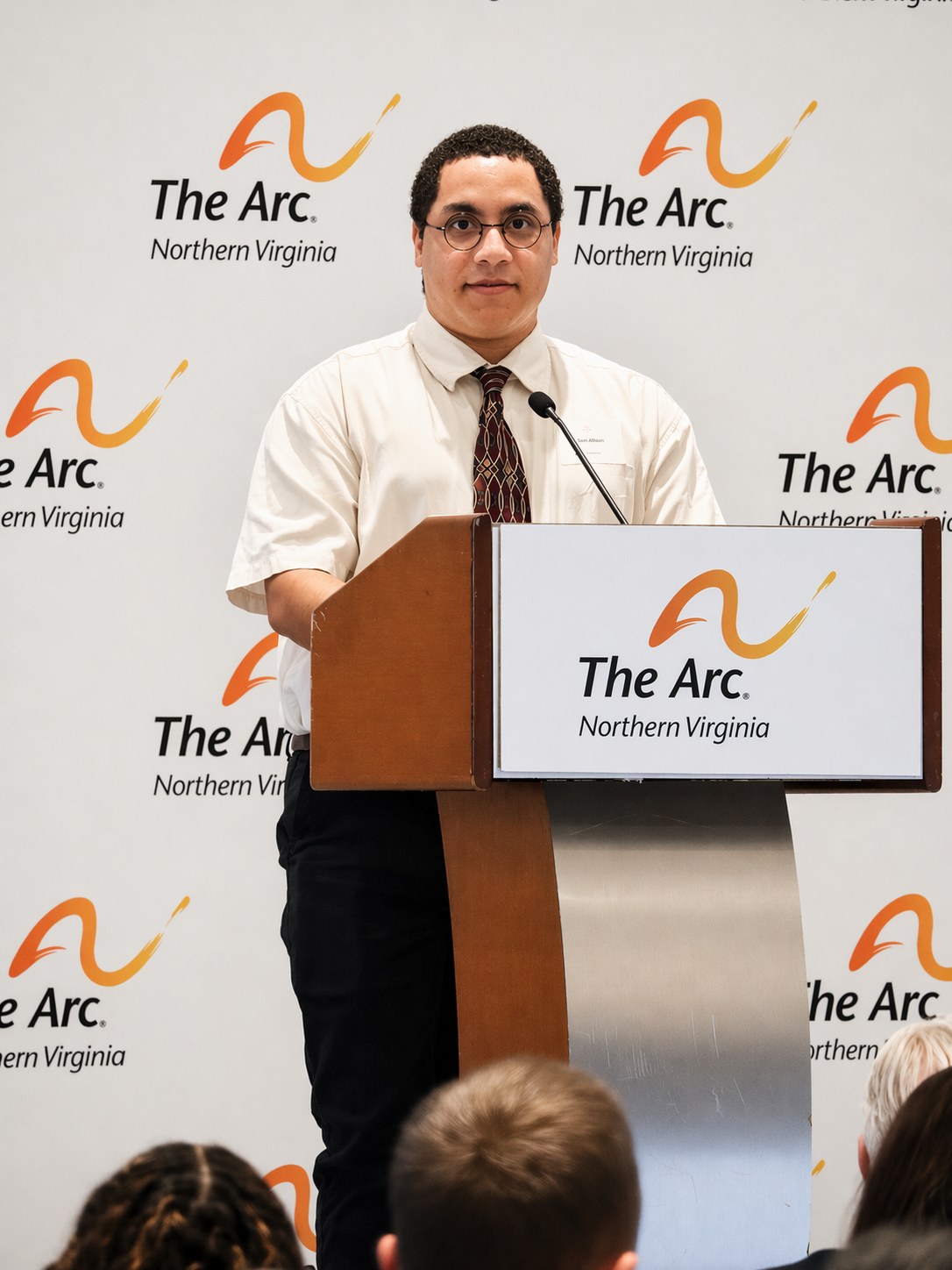
Ian Allan
Self-Advocate for The Arc of Northern Virginia