Introduction: The Limits of an Inherited Framework
The notion of the social contract, long treated as a foundational paradigm in political philosophy, has, in practice, revealed itself to be less a universal covenant and more a historically contingent instrument, shaped by exclusionary logics and sustained through tacit consent. While theorists have traditionally framed the contract as a mutual exchange of liberties for collective security, this formulation obscures a more disquieting reality: participation has never been evenly distributed, nor has its protection been equitably guaranteed.
To interrogate the social contract, then, is not merely to revisit a philosophical abstraction, but to examine the lived phenomenology of those who exist in its interstices, those for whom the promises of safety, dignity, and inclusion remain conditional, deferred, or altogether absent. Within the disability community, this dissonance is particularly pronounced. The contract, as currently codified, presupposes a normative subject: rational, autonomous, economically productive, and, critically, able-bodied and neurotypical.
This article advances a critical re-evaluation of that premise. It asks not only whether the social contract can be rewritten, but whether its underlying assumptions can be reconstituted in a manner that foregrounds interdependence, collective access, and the dismantling of ableist hegemony.
The Hegemony of Normativity: Who the Contract Was Built For
At its core, the traditional social contract operates within a hegemonic framework that privileges a narrow conception of personhood. This is not incidental; it is structural.
The elevation of autonomy as the highest political good, for instance, implicitly marginalizes those whose lived realities are defined by relationality, support needs, or fluctuating capacity.
Neurotypical norms, in this context, function as both cultural default and regulatory mechanism. They shape institutional expectations, inform policy codification, and delimit the boundaries of intelligibility within public life. To be recognized as a full participant in the social order is, more often than not, to approximate these norms. Those who cannot are frequently situated at the periphery, visible yet not fully accommodated; included, yet not fully integrated.
The consequences of this paradigm are neither abstract nor incidental. Educational systems privilege standardized cognition; labor markets reward uninterrupted productivity; civic participation assumes a baseline of physical, sensory, and cognitive uniformity. Such arrangements are often presented as neutral, yet they are undergirded by an ableist logic that conflates conformity with competence.
What emerges, then, is a quiet but persistent form of exclusion, one that is less overt than historical forms of disenfranchisement, yet no less consequential. It is embedded in design, normalized through repetition, and rarely interrogated in its totality.
Lived Experience as Counter-Narrative: A Personal Interjection
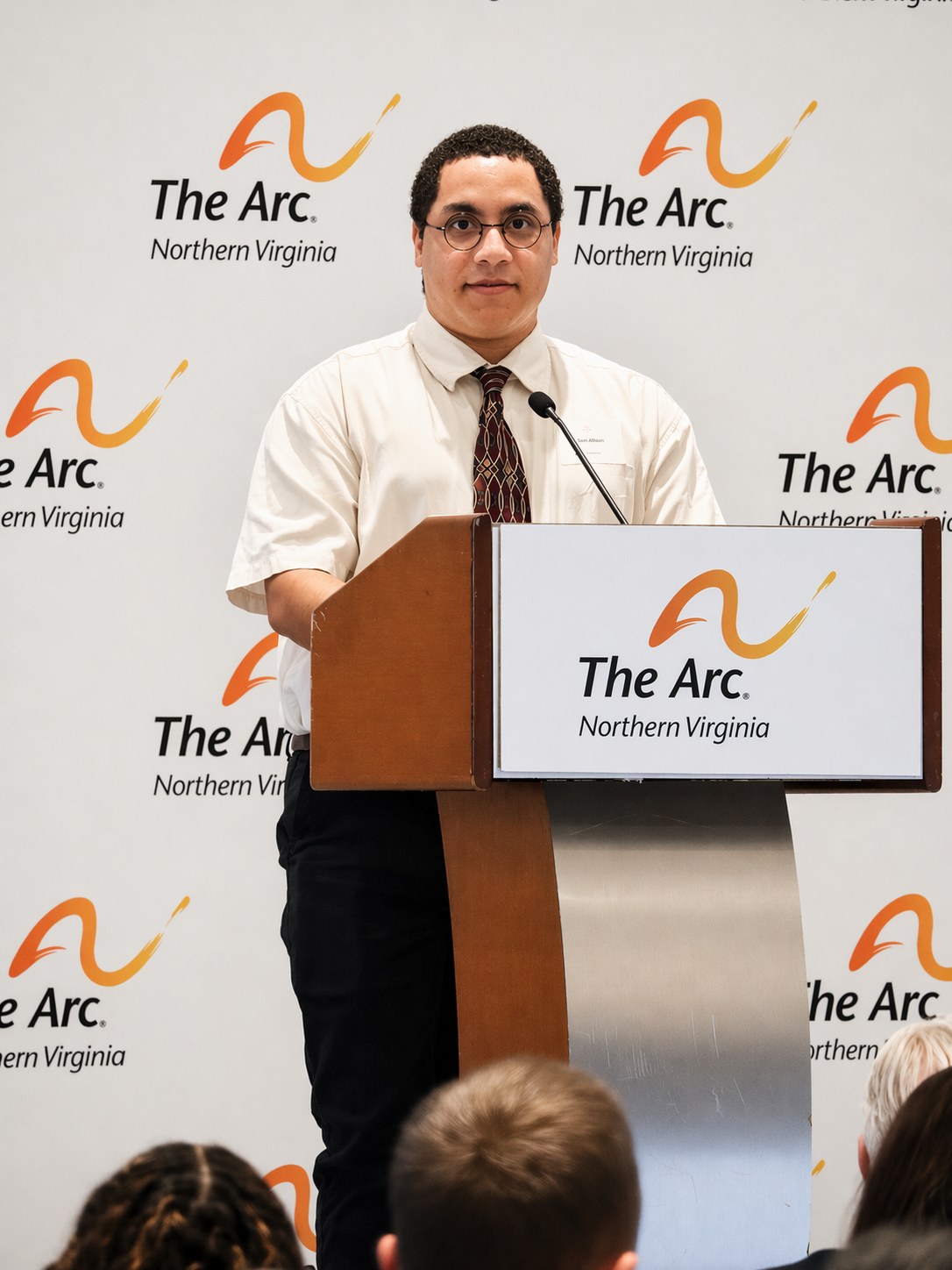
There is a particular clarity that emerges from navigating systems that were not constructed with one’s full participation in mind. As a disability self-advocate, I have encountered this tension not as an abstract dilemma, but as a recurring condition of engagement, one that requires constant calibration between external expectation and internal capacity.
This negotiation often unfolds in subtle, almost imperceptible ways. It is present in the modulation of language to align with neurotypical communication standards, in the decision to disclose or withhold aspects of identity in professional contexts, and in the quiet, sustained effort required to remain present in environments that are not inherently accessible.
Yet within these experiences lies a form of knowledge that resists codification. It is a phenomenological insight, an awareness of the gaps between policy and practice, between stated inclusion and lived reality. It reveals that the social contract is not
experienced uniformly, but differentially, mediated by one’s position within overlapping systems of power.
To articulate this is not to individualize a structural issue, but to illuminate its contours. For it is precisely through these lived encounters that the limitations of the current paradigm become most visible, and the necessity of its transformation most apparent.
From Independence to Interdependence: Reframing the Paradigm
If the prevailing social contract is organized around an ideal of independence, then its reconfiguration demands a fundamental shift toward interdependence, not as a concession, but as a generative principle. Independence, as traditionally conceived, is less an empirical reality than a normative aspiration, one that obscures the extent to which all individuals rely upon networks of care, infrastructure, and social support.
Interdependence, by contrast, offers a more accurate and ethically robust framework. It acknowledges that need is not an aberration, but a constant; that vulnerability is not a deficit, but a shared condition. Within disability justice discourse, this perspective is central, reframing support not as charity but as a mutual and reciprocal practice embedded within the social fabric.
This shift has profound implications. It destabilizes the binary between dependence and autonomy, challenging the moral hierarchies that often accompany such distinctions. It also reorients policy and practice toward collective access, understanding that accessibility is not an individualized accommodation, but a communal responsibility.
To adopt interdependence as a guiding paradigm is, therefore, to move beyond the constraints of normativity and toward a more expansive conception of belonging, one that does not require assimilation but instead accommodates difference as a constitutive element of the whole.
The Codification of Inclusion: Policy, Practice, and Structural Reform
A reimagined social contract cannot remain at the level of theoretical abstraction; it must be instantiated through deliberate acts of codification. This entails not only revising existing policies, but interrogating the assumptions that underlie them; assumptions that often persist unexamined, even within ostensibly progressive frameworks.
In practical terms, this involves the integration of universal design principles across domains, the expansion of support infrastructures such as Medicaid waivers, and the restructuring of educational and employment systems to accommodate diverse modes of cognition and embodiment. It also necessitates the inclusion of disabled individuals in decision-making processes not as symbolic participants, but as epistemic authorities whose insights are integral to the development of equitable systems.
However, codification without cultural transformation risks entrenching the very inequities it seeks to dismantle. Policies may mandate access, but if underlying attitudes remain unchanged, such mandates are often implemented unevenly or reduced to procedural formalities.
Thus, the project of rewriting the social contract must operate on multiple levels simultaneously. It must engage with law and policy, certainly, but also with language, narrative, and social norms. Anti-ableist frameworks must be cultivated not only within institutions, but within the broader cultural imagination.
- Rewriting the Contract: Toward a Collective Win
To suggest that a reconfigured social contract could enable “all” to win is to invite skepticism, particularly within a political climate often defined by zero-sum thinking. Yet this skepticism, while understandable, is itself indicative of the limitations imposed by existing paradigms.
A more expansive analysis reveals that inclusion, when approached with intentionality and rigor, generates benefits that extend beyond the communities it directly serves.
Accessible design enhances usability across contexts; flexible systems accommodate a wider range of human variability; inclusive practices foster innovation by incorporating multiple perspectives.
In this sense, the movement toward collective access is not merely a matter of equity, but of systemic resilience. It produces structures that are better equipped to respond to complexity, precisely because they are not predicated on uniformity.
To realize this vision, however, requires more than incremental reform. It demands a willingness to reconceptualize foundational assumptions, to redistribute not only resources, but power, and to remain attentive to the ways in which exclusion can re-emerge in new forms if left unexamined.
Conclusion: The Work of Ongoing Revision
The social contract, if it is to retain its relevance, must be understood as an evolving construct, one that is continually revised in response to shifting conditions and emerging forms of knowledge. Its legitimacy depends not on its historical pedigree, but on its capacity to adapt, to include, and to reflect the multiplicity of human experience.
For the disability community, this process is both urgent and generative. It involves not only advocating for inclusion within existing systems but also reimagining those systems altogether, challenging the hegemony of normativity and articulating alternative paradigms grounded in interdependence and collective access.
Such work is neither simple nor linear. It unfolds across time, within institutions and communities, through both policy and practice. Yet it is precisely through this sustained engagement that the possibility of a more equitable social contract begins to take shape.
Note of Thanks
I extend my sincere appreciation to the disability self-advocates, community leaders, and interdisciplinary thinkers whose work continues to inform and deepen this analysis. Their commitment to challenging entrenched paradigms and advancing more inclusive frameworks serves as both inspiration and foundation.
I am equally grateful to the communities that hold space for these conversations, and to the readers who engage with them critically and thoughtfully. It is through this collective endeavor that the reimagining of the social contract becomes not only possible but actionable.
Ian Allan
Self-Advocate for The Arc of Northern Virginia