Introduction: Patriotism Beyond Symbolism
Patriotism is often articulated as a universal virtue; an ethic of loyalty, sacrifice, and service to one’s country. It is invoked in civic rituals, political rhetoric, and cultural identity as something accessible to all who are willing to commit themselves to a shared national project. Yet, beneath this ostensibly inclusive ideal lies a more restrictive reality: the ability to perform patriotism in its most socially valorized form, military service, is not universally granted.
Instead, patriotism becomes stratified. It is not merely a feeling or belief, but a credentialed status, conferred upon those whose bodies and minds conform to institutional expectations. For many within the disabled community, this raises a critical question: Who is permitted to serve, and by extension, who is recognized as fully patriotic?
The Architecture of Eligibility: Law, Policy, and the Medicalization of Service
The framework governing military service in the United States reveals a deeply embedded system of exclusion rooted in medical and psychological standards. Under 50 U.S. Code § 3806, the federal government retains the authority to defer or exempt individuals deemed “physically, mentally, or morally deficient” within the context of the Selective Service System. While such language reflects an earlier legislative era, its underlying logic persists in contemporary policy.
Modern military regulations, including Department of Defense Instruction 1332.14 and Army Regulation AR 635–200, establish criteria for separation based on medical and psychological fitness. These frameworks, while framed as necessary for operational readiness, also codify a particular vision of the “ideal service member”, one that privileges neurotypicality, physical endurance, and psychological conformity.
Historically, the now-obsolete designation of “Section 8” discharge functioned as a stigmatizing mechanism for removing individuals deemed mentally unfit. Although the terminology has evolved, the structural implications remain: disability is positioned not as a variation of human experience, but as a disqualifying deficit.
This medicalization of service raises profound ethical concerns. It transforms eligibility into a gatekeeping mechanism, one that conflates capability with conformity and equates deviation with exclusion.
Neurotypical Norms and the Myth of the Ideal Citizen
At the cultural level, patriotism is frequently intertwined with archetypes of strength, resilience, and discipline; traits often framed through a neurotypical lens. The “ideal citizen” is imagined as someone who can endure hardship without accommodation, adapt without systemic support, and demonstrate loyalty through physical sacrifice.
This narrative marginalizes those whose experiences fall outside these constructed norms. Neurodivergent individuals, for example, may possess exceptional analytical, creative, or empathetic capacities, yet still be excluded from service due to rigid diagnostic criteria. Similarly, individuals with chronic illnesses or physical disabilities are often precluded from participation regardless of their intellectual or strategic contributions.
Such exclusions reveal a deeper cultural contradiction: while patriotism is rhetorically inclusive, it is operationally selective. The nation celebrates diversity in principle, yet restricts participation in its most revered institutions to those who meet narrowly defined standards.
A Personal Reckoning: Legacy, Denial, and Identity
For me, this tension is not theoretical; it is inherited, lived, and deeply personal.
Service is woven into my family’s history. My paternal grandfather served in the Royal Air Force, contributing to a legacy shaped by discipline, duty, and national commitment. My late uncle carried that legacy forward through his service in the United States Army, where he worked within the personnel section, supporting the structural and human dimensions of military operations.
That lineage was not distant to me; it was formative. It instilled a sense of continuity and responsibility, a belief that service was not only honorable but also, in some ways, expected. I sought to carry that legacy forward by pursuing enlistment in the United States Marine Corps, the same branch in which my father served.
However, during my senior year of high school, that path was definitively closed. Due to my extensive medical history, I was deemed ineligible for enlistment.
The denial was not simply administrative; it was disorienting. It disrupted a narrative I had internalized about identity, belonging, and contribution. In a single determination, my capacity to serve was reduced to a set of medical criteria that did not fully capture my abilities, my values, or my willingness to contribute.
What made this particularly complex was the contrast: a family history defined by recognized service, and a personal reality defined by institutional exclusion. The question was no longer whether I felt patriotic, but whether that patriotism would ever be acknowledged within the frameworks that traditionally define it.
In that moment, I began to understand patriotism not as a universal call equally answered, but as a conditional invitation; extended selectively, and often withdrawn based on factors beyond one’s control.
Disability Justice and the Reframing of Service
Disability justice offers a critical framework for reimagining patriotism beyond exclusionary paradigms. At its core, disability justice challenges the primacy of independence as the defining marker of worth. Instead, it emphasizes interdependence, collective access, and the dismantling of anti-ableist norms.
From this perspective, service need not be confined to military participation. It can, and must, be understood as a broader commitment to community, equity, and mutual support. Advocacy, policy reform, caregiving, and community organizing are all forms of service that sustain the social fabric.
For individuals within the disabled community, patriotism often manifests not through sanctioned roles but through acts of resilience and resistance. Navigating inaccessible systems, advocating for systemic change, and fostering inclusive spaces are themselves expressions of civic engagement.
This reframing does not diminish the value of military service; rather, it situates it within a more expansive and equitable understanding of contribution.
Toward an Inclusive Conception of Patriotism
If patriotism is to retain its moral legitimacy, it must evolve. It must move beyond a narrow association with physical and psychological conformity and embrace a more inclusive vision of participation.
This requires both structural and cultural transformation. At the policy level, it calls for a reevaluation of medical standards and an exploration of alternative pathways for service. At the cultural level, it demands a shift in how we define strength, loyalty, and contribution.
An inclusive patriotism recognizes that devotion to one’s country is not contingent upon the ability to serve in uniform. It acknowledges that the nation is upheld not only by those who defend it militarily, but also by those who challenge it to be more just, more accessible, and more humane.
Conclusion: Service as a Shared Responsibility
Patriotism, when stripped of its exclusionary frameworks, becomes less about eligibility and more about responsibility. It is not a status granted to a select few, but a collective endeavor that invites participation in diverse and meaningful ways.
For those who have been denied traditional avenues of service, this reframing offers both validation and possibility. It affirms that their contributions are not secondary or peripheral, but essential to the ongoing project of nation-building.
In this sense, patriotism is not diminished by inclusion; it is strengthened by it.
Note of Thanks
I extend my sincere gratitude to those who have served, continue to serve, and support service in its many forms. Your contributions, whether through military duty, community advocacy, or the pursuit of a more equitable society, embody the multifaceted nature of patriotism.
I also wish to acknowledge the disability community, whose ongoing efforts to challenge exclusionary systems and advance collective access continue to redefine what it means to serve. Your work not only expands the boundaries of participation but also deepens our understanding of justice, interdependence, and shared humanity.
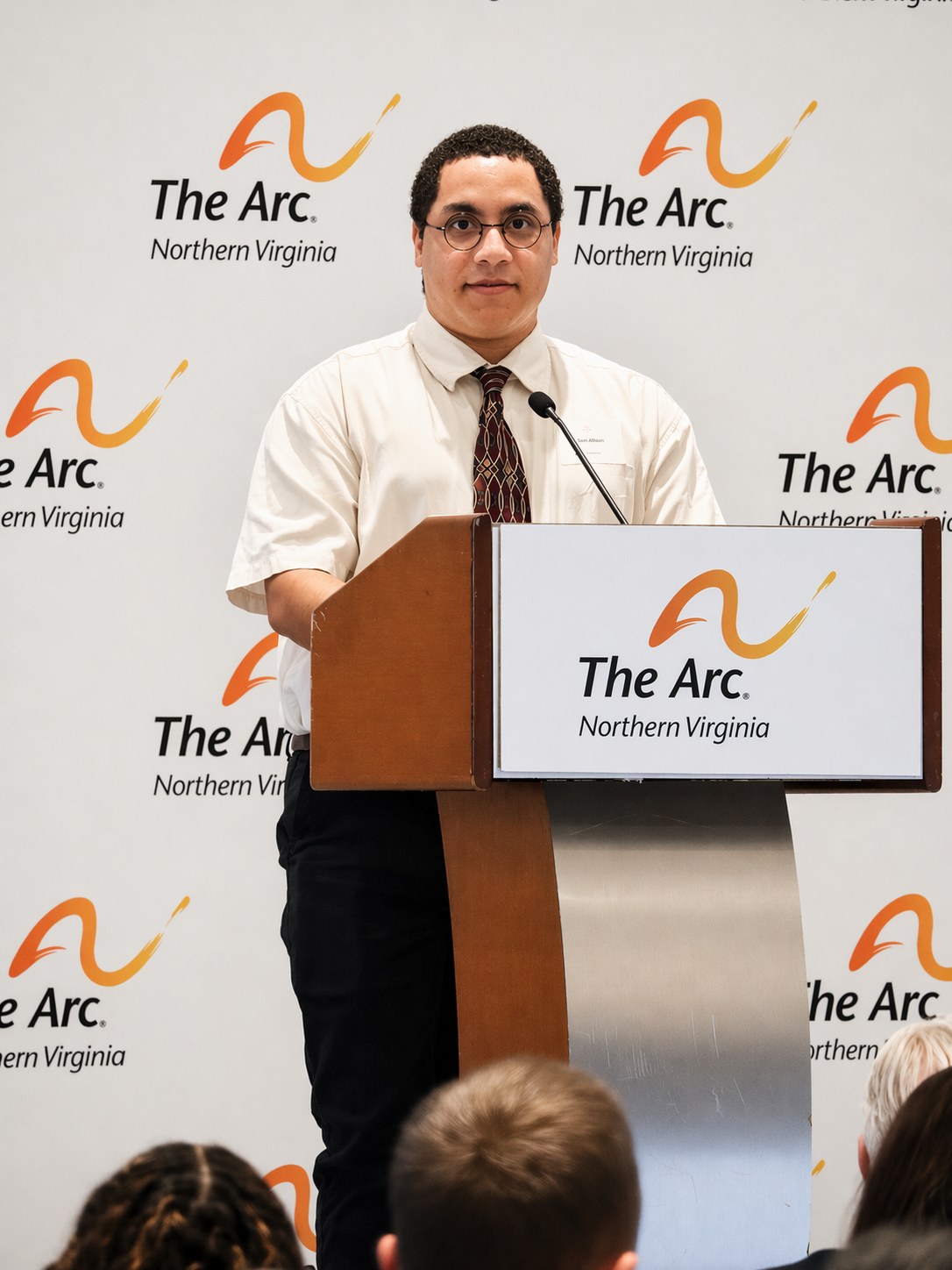
Ian Allan
Self-Advocate for The Arc of Northern Virginia