Introduction — Arriving with Expectations, Leaving with Hope
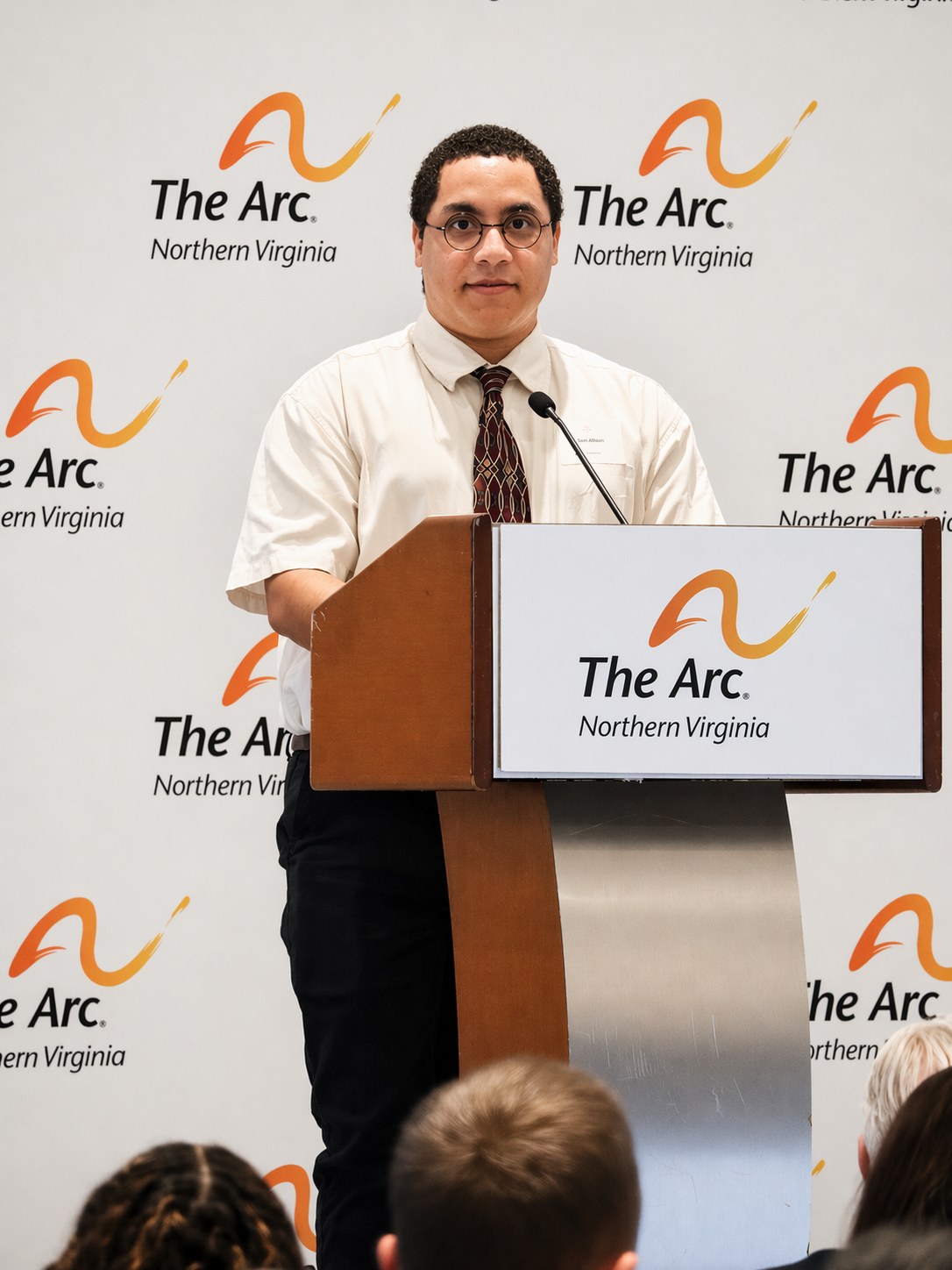
Walking into the 2025 Arc of Virginia Convention, I expected to learn about new policy developments, hear from experienced advocates, and connect with others who share a commitment to building a more inclusive Virginia. What I did not expect was how deeply the experience would cause me to reflect on my own journey as a self-advocate. By the time I left, I wasn’t simply thinking about the presentations I had attended or the conversations I had shared. I was thinking about how advocacy continues to shape my understanding of community, resilience, and hope.
This year’s theme, From Shifting Sand to Calmer Seas, resonated with me almost immediately. It was more than a conference slogan; it was an honest reflection of where many people with intellectual and developmental disabilities find themselves today.
Too often, we navigate systems that can feel uncertain, fragmented, and constantly changing. Policies evolve, services shift, and supports vary depending on circumstances that are often beyond our control. Like walking across shifting sand, maintaining stability can sometimes feel like a challenge in itself.
Yet the theme also carried a message of optimism. It reminded me that calmer seas are not found by standing still; they are reached through persistence, collaboration, and a shared commitment to making systems more responsive to the people they serve.
Throughout the convention, I saw that message reflected not only in formal presentations but also in hallway conversations, shared experiences, and the unmistakable sense of community that brought hundreds of advocates together under one roof.
By the end of the weekend, I realized the convention had offered me something more valuable than information alone. It had renewed my sense of purpose and reminded me that meaningful advocacy is built not only through legislation and policy, but through
relationships, lived experience, and the courage to continue showing up for one another.
From Shifting Sand to Calmer Seas
The convention’s theme served as a powerful metaphor for the current landscape of disability advocacy in Virginia. For many individuals with intellectual and developmental disabilities, life is often shaped by systems that feel unpredictable. Funding priorities change. Programs evolve. Regulations are updated. Access to services can depend on geography, available resources, or circumstances beyond a person’s control. Like shifting sand beneath our feet, these realities can make stability feel difficult to achieve.
At the same time, the theme acknowledged something equally important: change can also bring opportunity. Throughout the convention, speakers and attendees emphasized that periods of uncertainty can become catalysts for meaningful reform when they are guided by collaboration, thoughtful leadership, and the voices of people with lived experience.
That message resonated deeply with me because advocacy itself often follows a similar path. Progress is rarely immediate or straightforward. Instead, it is built one conversation, one relationship, and one act of persistence at a time. Calmer seas are not something we simply arrive at—they are something we create together through patience, trust, and a shared commitment to building communities where everyone belongs.
When a Story Feels Like Your Own
One of the most meaningful moments for me came during the keynote address. As I listened to the speaker share their story, I unexpectedly found myself thinking about both my sister and myself. Certain experiences they described felt remarkably familiar, reminding me of the challenges our family has navigated and the resilience that has carried us through them. For a few moments, the keynote ceased to be simply a presentation; it became a mirror reflecting many of the emotions, hopes, and uncertainties that accompany life with a disability.
Looking around the room afterward, it was clear I wasn’t the only person who had been deeply moved. The applause that followed felt less like recognition for an excellent
speech and more like an acknowledgment of shared experiences. It reminded me why storytelling remains one of advocacy’s most powerful tools. Data, legislation, and policy are essential, but stories help us understand the people behind those policies. They transform abstract issues into deeply human experiences that inspire empathy and action.
That session reminded me that advocacy is not only about changing systems—it is also about helping people feel seen. Sometimes the most meaningful change begins when someone hears a story that reflects their own experience and realizes they are not alone.
Celebrating Progress While Recognizing the Journey Ahead
Another unforgettable moment came during the Special Recognition Dinner, which celebrated the transition of Virginia’s Department of Justice Settlement Agreement into a permanent injunction. While this milestone represents a significant legal achievement, it also symbolizes something much more profound. It reflects decades of determination by self-advocates, families, disability organizations, and allies who refused to accept that people with disabilities should settle for unequal opportunities or unnecessary institutionalization.
As someone who has experienced both the strengths and shortcomings of disability services, witnessing that achievement being celebrated filled me with hope. Progress often feels slow, and meaningful change rarely happens overnight. Yet evenings like this serve as powerful reminders that persistent advocacy can reshape systems that once seemed impossible to change. Every policy victory begins with individuals who are willing to raise their voices, share their experiences, and continue advocating even when the path forward feels uncertain.
The celebration was not simply about looking back on what had been accomplished. It was also about recognizing the responsibility we all share in protecting those gains and continuing the work that remains. Every generation of advocates builds upon the efforts of those who came before them, and that evening served as a reminder that our work today lays the foundation for tomorrow.
Advocacy Is a Partnership
Throughout the convention, conversations surrounding The Arc of Virginia’s 2026 Legislative Agenda reinforced a lesson that has become increasingly important in my own advocacy work: lasting progress is built through partnership. Meaningful reform is rarely accomplished by a single organization, elected official, or self-advocate acting alone. Instead, it is achieved when policymakers, service providers, families, advocates, and individuals with lived experience work together toward a shared vision of inclusion and equity.
One message echoed consistently across presentations and discussions: those most directly affected by public policy should be meaningfully involved in shaping it.
Disability advocacy is strongest when self-advocates are not merely consulted after decisions have been made, but are invited to participate from the beginning. Lived experience is not a supplement to policy. It is an essential source of expertise that helps ensure legislation reflects the realities of everyday life.
This philosophy has increasingly shaped my own approach to advocacy. Whether writing articles, participating in legislative meetings, or engaging in conversations with policymakers, I have come to appreciate that meaningful change begins with listening. Before solutions can be developed, experiences must first be understood. Before systems can improve, the people navigating those systems every day must have the opportunity to share what is working, what is not, and where barriers continue to exist.
The convention served as a powerful reminder that advocacy is not about speaking for others. It is about creating opportunities for people to speak for themselves while ensuring those voices are heard, respected, and reflected in the decisions that shape our communities.
Finding My Place in the Conversation
As I reflected on the discussions taking place throughout the convention, I found myself thinking about how much my own advocacy journey has evolved over the past several years. When I first began sharing my experiences publicly, I viewed advocacy primarily as raising awareness. Today, I see it as something much broader: building relationships, encouraging dialogue, and helping create spaces where people feel comfortable sharing their own stories.
Writing for From the Self-Advocate’s Desk has become one of the most meaningful ways I contribute to that conversation. Each article allows me to explore issues affecting the
disability community while connecting policy discussions with the lived experiences behind them. Writing has taught me that advocacy is not only measured by legislation passed or programs created. Sometimes, its greatest impact comes from helping another person feel understood or giving someone the confidence to share their own perspective.
The convention reaffirmed that every advocate’s journey looks different. Some advocate by speaking before legislative committees. Others organize within their local communities, support families, educate professionals, or mentor emerging self-advocates. Each contribution, regardless of its size or visibility, strengthens the broader movement toward inclusion.
That realization left me feeling both humbled and encouraged. While there is always more to learn, I also recognized that my own experiences and voice have value.
Advocacy is not reserved for experts alone; it belongs to everyone willing to participate with empathy, honesty, and a genuine desire to improve the lives of others.
Learning from Fellow Self-Advocates
Among the sessions that left the greatest impression on me were those led by fellow self-advocates who shared their legislative journeys. Listening to their experiences reminded me that meaningful advocacy often begins with ordinary people choosing to address extraordinary challenges.
Each speaker described a unique path into advocacy, yet common themes emerged throughout their stories. They spoke about persistence in the face of setbacks, the importance of preparation, and the confidence that grows through experience. Their journeys demonstrated that advocacy is not defined by perfection or expertise but by the willingness to continue showing up, even when progress feels slow.
One concept that particularly resonated with me was the AVA method—Acknowledge, Validate, Act. Although I had not previously described my own advocacy using those exact terms, I quickly realized that its principles already influence much of the work I do.
When I write about disability issues, I strive to begin by acknowledging the experiences people share. I seek to validate the emotions that often accompany those experiences, whether they involve frustration, hope, uncertainty, or accomplishment. Only then do I
encourage thoughtful action, whether through civic engagement, community conversations, or continued advocacy.
The simplicity of the AVA framework makes it especially powerful. It reminds us that advocacy is not solely about persuading others or advancing policy proposals. It begins by recognizing another person’s humanity. When individuals feel heard and understood, they become more willing to engage in meaningful conversations that lead to lasting change.
Leaving that session, I realized that effective advocacy is built as much upon compassion as it is upon strategy. Facts and research matter, but empathy is often what opens the door to genuine understanding.
Every Law Begins with Someone Speaking Up
Another memorable breakout session featured Charlotte Woodard, whose presentation offered a thoughtful and practical look at introducing legislation and navigating the legislative process. Rather than presenting policymaking as something distant or inaccessible, she demonstrated how meaningful change often begins with a single idea supported by persistence and collaboration.
Her presentation reminded me that every law has a story behind it. Before legislation is debated, amended, or signed into law, someone first recognizes a need that has gone unmet. Someone notices a barrier, imagines a better solution, and chooses to speak up.
That perspective resonated deeply with me because it reflects the heart of disability advocacy. Many of the improvements our community enjoys today, from greater accessibility to expanded opportunities for independent living, exist because individuals refused to accept that existing systems were the best we could achieve.
As someone who regularly communicates with legislators, submits public comments, and writes about disability policy, I found her presentation especially encouraging. It reminded me that meaningful advocacy does not always require holding public office or possessing legal expertise. Every thoughtful letter, every testimony, every conversation, and every personal story contributes to a larger dialogue capable of shaping future policy.
Sometimes the most important step toward changing a law is simply deciding that your voice deserves to be part of the conversation.
Building a Convention That Reflects Every Voice
One of the qualities I appreciated most about this year’s convention was its commitment to bringing together a wide range of perspectives. Throughout the weekend, self-advocates, family members, direct support professionals, service providers, policymakers, educators, and community leaders all contributed to the conversation. Each perspective offered a unique lens through which to view the opportunities and challenges facing Virginia’s disability community.
That diversity of voices is one of The Arc of Virginia’s greatest strengths. No single person experiences disability in the same way, and no single solution can address every challenge our community faces. By creating space for people with different experiences to learn from one another, the convention demonstrated that meaningful progress depends on listening just as much as it depends on leading.
I was especially encouraged by the prominence of self-advocate voices throughout the conference. For generations, people with disabilities have often found themselves spoken about rather than spoken with. This convention reflected a continued shift toward recognizing self-advocates not simply as participants, but as leaders, educators, and partners whose lived experiences strengthen every discussion.
If I were to offer one hope for future conventions, it would be to continue expanding opportunities for self-advocates to share their personal stories. While policy presentations and educational workshops provide invaluable information, it is often the lived experiences behind those issues that leave the deepest impression. Stories invite empathy in ways statistics alone cannot. They help people understand not only what barriers exist, but what those barriers feel like for the individuals who encounter them every day.
Creating additional opportunities for these conversations would further strengthen an already outstanding convention. Every story shared has the potential to encourage someone else to speak, ask a question, or see an issue from a new perspective. Those moments of connection are often where lasting change begins.
Continuing the Conversation Beyond the Convention
Although the convention lasted only a few days, the conversations it inspired will remain with me long afterward. One of the greatest lessons I took away is that advocacy does not begin or end within the walls of a conference center. The ideas exchanged
during presentations become meaningful only when they continue to influence our communities, workplaces, legislative offices, and everyday conversations.
As I drove home, I found myself reflecting on the many people I had met, the stories I had heard, and the renewed sense of purpose I felt leaving the convention. Those experiences reminded me that advocacy is not measured solely by major legislative victories or public recognition. More often, it is built through consistent acts of engagement: listening carefully, asking thoughtful questions, sharing personal experiences, and encouraging others to believe that their voices matter.
For me, writing has become one of the most meaningful ways to continue those conversations. Through From the Self-Advocate’s Desk, I hope to build bridges between policy and lived experience, helping readers better understand not only the challenges facing the disability community but also the possibilities that emerge when people come together with compassion and determination.
Every article I write is an invitation. It is an invitation to listen more closely, to think more deeply, and to recognize that creating a more inclusive society is not the responsibility of a select few—it belongs to all of us. Whether someone is a self-advocate, family member, policymaker, educator, employer, or community member, each person has a role to play in making inclusion a reality.
The convention reminded me that advocacy is not a destination we eventually reach. It is an ongoing practice of learning, growing, listening, and working alongside others in pursuit of something larger than ourselves.
Conclusion — The Tide Is Already Turning
Looking back on the 2025 Arc of Virginia Convention, I realize its greatest impact was not found in any single keynote address, breakout session, or policy discussion. Instead, it was found in the people. It was found in the conversations that continued long after presentations had ended, in the encouragement shared between advocates, and in the collective belief that meaningful change remains possible when we work together.
Throughout the weekend, I witnessed something that cannot always be measured by legislative agendas or conference schedules: hope. Not a passive hope that waits for change to happen on its own, but an active hope expressed through collaboration, persistence, and the willingness to continue building a more inclusive Commonwealth for future generations.
The convention also reminded me how much my own understanding of advocacy has evolved. Years ago, I viewed advocacy primarily as speaking up about issues that mattered to me. Today, I see it as something far richer. Advocacy is listening before speaking. It is creating space for others to share their experiences. It is building relationships across differences, recognizing our shared humanity, and believing that every person has something valuable to contribute.
The journey from shifting sand to calmer seas is not one that any of us travels alone. Every conversation, every story, every legislative meeting, every article, and every act of kindness contributes to a larger movement that continues to shape a more accessible and equitable Virginia. Progress may not always happen as quickly as we hope, but each step forward reflects the dedication of countless individuals who believe that inclusion should never be optional.
As I left the convention, I carried home far more than notes from presentations or new policy ideas. I carried a renewed sense of purpose, a deeper appreciation for the strength of our advocacy community, and an even greater commitment to using my voice in service of others. Those lessons will continue guiding my work long after the convention has concluded.
The 2025 Arc of Virginia Convention reminded me that calmer seas are not simply places we hope to reach someday. They are created every time we choose to listen instead of dismiss, to collaborate instead of divide, and to believe that every person deserves the opportunity to live with dignity, independence, and belonging.
From where I stand, the tide is already beginning to turn. Together, we are doing more than weathering the waves. We are learning to navigate them with compassion, resilience, and the confidence that calmer seas truly are within reach.
A Note of Thanks
As I reflect on this year’s convention, I am filled with gratitude for the many individuals whose dedication made the experience both meaningful and inspiring.
My sincere thanks go to The Arc of Virginia, its staff, volunteers, presenters, sponsors, and countless organizers who worked behind the scenes to create a convention that was welcoming, informative, and thoughtfully organized. Bringing together self-advocates, families, professionals, policymakers, and community partners from across the
Commonwealth is no small undertaking, and your commitment to fostering dialogue, collaboration, and inclusion was evident throughout every aspect of the event.
I am especially grateful to the keynote speakers, breakout session presenters, and fellow self-advocates who shared their personal stories so openly. Your willingness to speak with honesty and vulnerability reminded me that some of the most meaningful lessons are not found in presentations or policy documents, but in the lived experiences that connect us. Your voices strengthened my understanding of advocacy and reaffirmed why authentic representation matters.
To the fellow attendees I had the opportunity to meet, reconnect with, and learn alongside, thank you for the thoughtful conversations, shared encouragement, and sense of community that extended far beyond the scheduled sessions. Every interaction reinforced the belief that lasting change is built through relationships as much as through legislation.
Finally, thank you to everyone who continues to advocate for a Virginia where people with intellectual and developmental disabilities are recognized not simply for their needs, but for their strengths, talents, and invaluable contributions to our communities. Your dedication reminds me that meaningful progress is never the work of one individual alone. It is a collective effort built upon compassion, perseverance, and the shared belief that every person deserves the opportunity to live with dignity, independence, and belonging.
I leave this year’s convention encouraged, inspired, and deeply appreciative of the community that continues to move us toward calmer seas. I look forward to continuing this journey alongside all of you.
Ian Allan
Self-Advocate for The Arc of Northern Virginia