Introduction: Understanding the Internal Awakening of Marginalized Communities
Throughout human history, communities that have experienced prolonged exclusion have often reached a point of collective awakening; a moment when the narratives imposed upon them no longer align with their lived realities. These moments are not born from a singular grievance, nor do they emerge solely from dissatisfaction with existing systems. Rather, they develop within the complex interstices between recognition and exclusion, accommodation and autonomy, visibility and genuine participation. For disabled and disenfranchised communities, this awakening represents an internal transformation: the realization that the barriers encountered are not merely individual struggles but manifestations of broader social, cultural, and institutional paradigms.
The concept of an “intifada within” is used throughout this essay as a philosophical metaphor for this internal awakening. While the term intifada carries specific historical and political meanings, this discussion does not seek to equate disability advocacy with any particular geopolitical movement. Instead, it examines the broader phenomenon of marginalized communities reaching a threshold where self-advocacy evolves into collective resistance; a point at which individuals begin challenging the systems, assumptions, and narratives that have historically defined their existence.
Within disability communities, resistance has often emerged from the tension between being acknowledged and being empowered. Many disabled individuals are technically included within social structures while simultaneously being denied meaningful influence over how those structures operate. The language of inclusion can sometimes obscure deeper questions regarding authority, representation, and whose knowledge is valued. A person may be invited into a workplace, educational environment, or community space while still being expected to conform to standards established without consideration of diverse neurological, physical, sensory, or communication experiences.
The historical hegemony surrounding disability has frequently operated through a deficit-based paradigm, one that interprets disability primarily through limitation rather than through human variation. This framework has shaped policies, institutions, and cultural expectations for generations. Consequently, disability advocacy has not merely been a pursuit of additional services or accommodations; it has also been a challenge to the underlying assumptions that determine whose experiences are considered legitimate.
For many self-advocates, including those navigating neurodivergent identities, the journey toward collective liberation begins with questioning inherited narratives. It requires examining why certain forms of communication are considered professional, why specific behaviors are labeled appropriate or inappropriate, and why independence is often valued above interdependence. These questions reveal that disability justice is not only concerned with access but with transformation; the creation of environments where disabled individuals are not simply permitted to exist but are recognized as essential contributors to society.
The “intifada within” therefore represents a philosophical shift: moving from requesting acceptance within existing structures toward imagining and constructing systems built upon dignity, collective access, and shared humanity. It is the moment when marginalized communities begin to redefine themselves beyond the limitations historically assigned to them and seek liberation through collective understanding.
The Historical Codification of Disability: From Objectification to Self-Determination
To understand why collective resistance emerges within disabled communities, it is necessary to examine the historical processes through which disability itself has been constructed, interpreted, and regulated. Disability has never existed solely as a biological or individual experience; rather, societies have continuously shaped its meaning through cultural beliefs, institutional practices, and systems of power. The codification of disability throughout history reveals a recurring pattern: when a society defines human worth through narrow standards of ability, those who exist outside those standards are often positioned as exceptions requiring management rather than individuals deserving equal participation.
For centuries, disabled people have been subjected to social frameworks that emphasized dependency, deficiency, and separation. Within many historical contexts, disability was interpreted through moral, medical, or economic lenses that frequently diminished personal autonomy. Disabled individuals were often viewed as objects of charity, subjects of institutional control, or burdens upon social systems. These interpretations were not simply personal attitudes; they became embedded within laws, educational systems, employment practices, and public policies. Through this process, ableism became more than interpersonal prejudice; it became an organizing principle within many institutions.
The emergence of eugenics movements represents one of the most severe manifestations of this historical paradigm. Under eugenic ideologies, disabled people were often categorized as socially undesirable, and their existence was framed through a lens of perceived biological inferiority. These ideas influenced forced sterilization policies, institutionalization practices, and exclusionary social structures. Although many of these explicit practices have been challenged or dismantled, remnants of this thinking continue to influence contemporary discussions surrounding disability, productivity, independence, and social value.
The legacy of institutionalization also demonstrates how societies have historically separated disabled individuals from broader community life. Institutions were frequently justified as forms of protection or care; however, many functioned as environments where disabled people experienced isolation, limited autonomy, and diminished recognition of their individual identities. The underlying assumption was that disabled people belonged in spaces created specifically for them rather than within the shared spaces of society.
The disability rights movement fundamentally challenged this framework by asserting that exclusion was not an inevitable consequence of disability itself but a result of social structures designed without disabled people in mind. This shift represented a profound philosophical transformation: disability began to be understood not solely as an individual condition but as an interaction between human diversity and environmental barriers.
However, the movement from disability rights toward disability justice has expanded this analysis further. While disability rights efforts have successfully pursued legal protections and accessibility standards, disability justice examines the deeper systems that determine who receives access, whose voices are amplified, and whose experiences are overlooked. It questions whether inclusion alone is sufficient when the foundational structures remain unchanged.
This distinction is critical because a society can comply with accessibility requirements while maintaining underlying ableist assumptions. A building may contain a ramp, but the organization within that building may still disregard disabled perspectives. A workplace may provide accommodations, yet continue valuing only one form of communication, productivity, or professionalism. A school may offer support services while maintaining expectations rooted in neurotypical norms.
The historical codification of disability therefore provides essential context for understanding contemporary resistance. When communities repeatedly encounter systems that recognize their existence but fail to respect their agency, collective advocacy becomes not merely an effort to obtain resources but an effort to redefine the social paradigm itself.
The movement toward self-determination emerges from this recognition: disabled people are not asking to be incorporated into someone else’s vision of society. They are asserting their role as architects, participants, and decision-makers in shaping the future.
The Anatomy of Disenfranchisement: When Systems Create the Conditions for Resistance
Resistance rarely emerges from a singular moment of frustration. More often, it develops gradually through repeated encounters with systems that appear functional on the surface yet remain inaccessible, unresponsive, or fundamentally misaligned with the lived experiences of those they intend to serve. Within disabled communities, disenfranchisement frequently occurs not through explicit exclusion alone, but through subtler mechanisms: limited representation, inadequate consultation, inaccessible communication structures, and institutional practices that prioritize compliance over collaboration.
The paradox of modern inclusion is that marginalized individuals may be physically present within a system while remaining absent from its decision-making processes. A disabled person may attend a school, participate in a workplace, receive services, or engage with community organizations; however, presence does not automatically translate into influence. Inclusion without authority can become a symbolic gesture rather than a meaningful redistribution of power. The distinction between being invited into a space and having the ability to shape that space represents one of the central tensions within contemporary disability advocacy.
This tension exists because many institutions continue to operate through inherited paradigms regarding disability. These paradigms often assume that disabled individuals are primarily recipients of assistance rather than contributors of expertise.
Consequently, policies and practices may be designed around disabled people without sufficient participation from disabled people. This creates a form of structural contradiction: systems may claim to support disability inclusion while simultaneously maintaining structures that limit disabled autonomy.
The concept of disenfranchisement within disability communities extends beyond access to physical environments. It includes the restriction of voice, credibility, and social authority. Throughout history, disabled individuals have frequently experienced situations where professionals, caregivers, or institutions interpret their experiences on their behalf. Although support relationships can be meaningful and necessary, the absence of disabled leadership within discussions about disability creates an imbalance in which lived experience becomes secondary to external interpretation.
This issue is particularly evident within neurodivergent communities, where communication differences are often misunderstood through a deficit-oriented lens. Autistic individuals, people with intellectual disabilities, and individuals with communication-related disabilities have historically encountered assumptions regarding competence based upon speech patterns, social behaviors, emotional expression, or methods of interaction. When society equates a specific communication style with intelligence, professionalism, or credibility, it creates an environment where many disabled voices are dismissed before they are fully heard.
The resulting frustration is not simply personal; it is cumulative. Years of navigating inaccessible systems, correcting misconceptions, and advocating for recognition can create a collective consciousness among marginalized communities. The repeated experience of having to explain one’s humanity before discussing one’s needs represents an exhausting social burden.
Within these circumstances, resistance becomes an understandable response to persistent disenfranchisement. The “intifada within” emerges when individuals and communities recognize that the barriers they face are not isolated incidents but interconnected manifestations of larger systems. This realization transforms advocacy from an individual pursuit into a collective movement toward structural change.
The purpose of this resistance is not the rejection of society itself, but the rejection of paradigms that restrict participation. It represents a demand for a more expansive understanding of citizenship, belonging, and human contribution; one in which disabled individuals are not merely accommodated within existing structures but recognized as essential voices in shaping them.
Neurotypical Hegemony and the Invisible Architecture of Exclusion
Among the many dimensions of disability disenfranchisement, one of the most complex involves the influence of neurotypical norms: the implicit assumptions regarding communication, behavior, productivity, emotional expression, and social interaction that frequently define what society considers “normal.” These expectations often operate invisibly, not because they are insignificant, but because they have become deeply embedded within cultural institutions. Like many forms of hegemony, neurotypical dominance does not always require deliberate exclusion; rather, it persists through the unexamined belief that one particular way of thinking, processing information, and engaging with the world represents the universal standard.
This phenomenon creates an invisible architecture of exclusion. Unlike a physical barrier, which can be identified and modified, social and neurological barriers are often concealed beneath traditions, expectations, and institutional routines. A workplace may not explicitly prohibit neurodivergent individuals from succeeding, yet its standards of professionalism may implicitly favor specific communication styles, sensory environments, and behavioral expectations. An educational system may provide accommodations while continuing to measure intelligence through narrow definitions of participation, expression, and academic achievement. A healthcare system may offer treatment while failing to recognize alternative forms of communication and lived experience.
The challenge, therefore, is not simply whether neurodivergent individuals can enter existing structures, but whether those structures have been designed with genuine neurological diversity in mind.
The dominance of neurotypical norms becomes particularly evident through the ways society interprets behavior. Actions such as avoiding eye contact, requiring additional processing time, experiencing sensory overload, engaging in repetitive movements, or communicating differently are often evaluated according to standards created without consideration of neurological variation. These behaviors may be interpreted as deficits rather than differences, resulting in environments where neurodivergent individuals are expected to continuously translate themselves into a language that others recognize.
This expectation creates a form of social labor that frequently remains invisible. Many neurodivergent individuals engage in masking, adaptation, or self-monitoring in order to navigate environments structured around neurotypical assumptions. While adaptation can sometimes be useful or necessary, the burden becomes problematic when acceptance is conditional upon suppressing authentic forms of communication and expression. The responsibility for accessibility is shifted away from the environment and placed entirely upon the individual.
Such dynamics reveal an important distinction between accommodation and transformation. Accommodation asks whether a person can function within a predetermined system if certain adjustments are provided. Transformation questions why the system was constructed in a manner that excluded certain experiences in the first place.
This distinction is central to disability justice because it challenges the assumption that accessibility is merely a technical matter. True accessibility involves examining the cultural and philosophical foundations that determine whose needs are anticipated and whose needs are treated as exceptions. It requires recognizing that disability is not simply an individual characteristic but a relational experience shaped by interactions between people, environments, and institutions.
Within this context, anti-ableist practice requires more than removing barriers after they are identified. It requires actively questioning the assumptions that created those barriers. It demands a shift from viewing disabled individuals as deviations from a standard toward recognizing human diversity as the foundation upon which communities are built.
The “intifada within” emerges within this intellectual and social space. It represents the moment when disabled individuals and communities challenge the idea that acceptance must be earned through conformity. Instead, it advances a different paradigm: that society itself must evolve to reflect the full complexity of human existence.
From Accommodation to Liberation: The Philosophy of Disability Justice
The evolution from disability rights toward disability justice represents one of the most significant philosophical shifts within contemporary disability advocacy. While disability rights have historically focused on securing legal protections, equal access, and recognition under existing frameworks, disability justice examines the deeper structures that determine whose lives are valued, whose voices are centered, and whose experiences shape the construction of society. It moves beyond the question of whether disabled individuals can participate and instead asks whether the systems themselves were designed with disabled individuals as full participants.
This distinction is essential because access alone does not necessarily create liberation. A society may implement accessibility measures while maintaining the underlying assumptions that produced exclusion in the first place. A policy may provide accommodations while leaving disabled individuals dependent upon institutional discretion. A workplace may satisfy compliance requirements while continuing to reward only narrow definitions of communication, efficiency, or professionalism. A community may welcome disabled individuals while failing to recognize their authority as leaders, decision-makers, and contributors.
Disability justice challenges this limited understanding of inclusion by introducing the principles of interdependence, collective access, and shared responsibility. Rather than framing independence as the ultimate measure of success, disability justice recognizes that all people exist within networks of support, relationships, and mutual reliance. The belief that a person’s worth is determined by their ability to function without assistance reflects a deeply embedded ableist paradigm; one that overlooks the reality that human beings have always depended upon one another.
Interdependence therefore becomes not a sign of limitation but an acknowledgment of human interconnectedness. Every person relies upon social, technological, emotional, and physical systems throughout their life. Disability justice simply makes this reality more visible by challenging the assumption that needing support diminishes an individual’s autonomy or dignity.
Collective access expands this idea further by examining accessibility as a communal responsibility rather than an individual request. Traditional models often place the burden on disabled individuals to identify barriers, request accommodations, and justify their needs. Collective access shifts the responsibility toward creating environments where diverse needs are anticipated from the beginning. It recognizes that accessibility is not an afterthought but a foundational component of equitable design.
This approach requires questioning the codification of ability within social institutions. Many systems continue to operate under the assumption that there is a standard participant: a person who communicates, learns, works, and interacts according to predetermined expectations. Disability justice challenges this assumption by asking who established that standard, whose experiences it reflects, and who has historically been excluded because of it.
The movement toward liberation, therefore, is not about creating a separate world for disabled people. It is about transforming the existing world so that disability is understood as part of human diversity rather than as an interruption to it. Liberation requires dismantling anti-ableist structures while simultaneously creating spaces where disabled individuals can participate without constantly defending their legitimacy.
Within this framework, the “intifada within” becomes an awakening of collective consciousness. It is the recognition that disabled communities do not merely require access to existing systems; they possess the knowledge and lived experience necessary to redesign those systems. Their advocacy is not simply a request for accommodation; it is an invitation to reconsider the foundations upon which society defines participation, contribution, and belonging.
The pursuit of collective liberation begins when disabled individuals are no longer viewed as subjects of change but as architects of it.
The Phenomenology of Resistance: Why Marginalized Communities Reach a Breaking Point
Resistance within marginalized communities is often misunderstood because it is frequently examined only at the moment it becomes visible. Society tends to observe the outward expression of collective frustration: the protest, the advocacy campaign, the public demand for change. Without fully examining the years of experience, conversations, and institutional encounters that preceded it. Yet resistance is rarely spontaneous. It is usually the culmination of accumulated experiences that reshape how individuals understand themselves, their communities, and the systems surrounding them.
The phenomenology of resistance, the lived experience of arriving at a point where existing structures no longer feel sufficient, reveals that collective action is deeply connected to identity formation. For disabled individuals, particularly those who have spent years navigating systems designed around deficit-based assumptions, resistance may emerge from the repeated realization that exclusion is not simply an isolated inconvenience. Rather, it is a recurring pattern produced by cultural expectations, institutional practices, and social narratives.
This realization can be transformative. An individual who once interpreted barriers as personal shortcomings may begin recognizing them as manifestations of larger structural issues. A disabled student who struggles within an inflexible educational environment, a disabled employee who encounters narrow workplace expectations, or a neurodivergent individual who is repeatedly misunderstood in social settings may eventually recognize that the difficulty does not exist solely within themselves. The environment itself may be contributing to the exclusion.
This shift in understanding represents a significant psychological and philosophical transition. It moves the individual away from internalizing ableist assumptions and toward examining the broader systems that shape opportunity and participation. The question changes from “How can I better adapt to this structure?” to “Why was this structure created without considering people like me?”
However, reaching this awareness is not without complexity. Marginalized communities often experience exhaustion from repeatedly advocating for recognition. The constant expectation to educate others, justify accommodations, or prove competence can create a significant emotional burden. Advocacy frequently requires individuals to transform personal experiences into evidence, compelling them to repeatedly explain realities that should already be acknowledged.
This dynamic is especially relevant within disability communities, where lived experience has historically been undervalued compared to professional or institutional expertise. While professional knowledge has an important role, disability justice emphasizes that disabled individuals possess an essential form of knowledge derived from direct experience. This knowledge challenges traditional hierarchies of expertise and expands the understanding of what qualifies as legitimate insight.
The emergence of collective resistance, therefore, represents more than dissatisfaction with existing circumstances. It reflects a demand for epistemic recognition, the acknowledgment that marginalized communities possess knowledge capable of reshaping society. Disabled people are not merely describing problems; they are offering alternative frameworks for understanding accessibility, communication, community, and human connection.
Yet resistance should not be interpreted solely through confrontation. At its most constructive, resistance is an act of imagination. It allows communities to envision possibilities beyond the limitations imposed upon them. The purpose is not simply to oppose existing structures but to create paradigms in which dignity and participation are no longer conditional.
The “intifada within” begins when individuals recognize their own experiences as meaningful sources of knowledge and when communities transform those experiences into collective action. It represents the movement from isolation toward solidarity, from silence toward dialogue, and from adaptation toward transformation.
The Complexity of Collective Liberation: Avoiding Simplified Narratives
Although resistance and collective awakening are essential components of social transformation, it is equally important to acknowledge that marginalized communities are not monolithic entities. Disability, like all human identities, exists within a complex landscape of experiences, perspectives, support needs, cultural backgrounds, and personal interpretations. Any serious examination of disability liberation must avoid replacing one oversimplified narrative with another. The pursuit of justice requires recognizing complexity, contradiction, and the diversity of voices that exist within the broader disability community.
Historically, disabled individuals have often been categorized through singular narratives. At different points, disabled people have been portrayed exclusively as dependent, inspirational, vulnerable, or heroic. While these narratives may appear different, they share a common limitation: they reduce disabled individuals to a predetermined role rather than recognizing them as complete human beings with varied ambitions, challenges, beliefs, and experiences. Disability justice challenges these narratives by emphasizing that disabled people are neither symbols of tragedy nor symbols of perseverance; they are individuals whose lives contain the same complexity found throughout humanity.
This complexity becomes particularly evident when examining differences within disability communities themselves. The experiences of a person with a physical disability may differ significantly from those of an autistic individual, a person with an intellectual disability, someone with a psychiatric disability, or a person with multiple disabilities. Even among individuals with the same diagnosis or disability identity, experiences can vary depending on communication style, socioeconomic circumstances, family support, geographic location, and access to resources.
For this reason, collective liberation cannot be built upon the assumption that there is only one pathway toward empowerment. Some individuals may prioritize independent living, while others may emphasize community-based support systems. Some may focus on policy reform, while others may focus on cultural transformation. Some may use identity-first language, while others prefer person-first language. These differences do not necessarily weaken disability advocacy; rather, they demonstrate the diversity of perspectives within the movement.
One of the most significant areas of complexity exists within conversations between disabled self-advocates, families, professionals, and service providers. These relationships can sometimes contain tension because each group may approach disability through different frameworks and lived experiences. Families may focus on protection and support, professionals may focus on services and interventions, and self-advocates may emphasize autonomy and personal authority. A disability justice framework does not require eliminating these perspectives; instead, it requires creating spaces where disabled individuals remain central participants in conversations about their own lives.
This distinction is fundamental because advocacy without representation can unintentionally reproduce the same power structures it seeks to challenge. If decisions about disabled communities continue to occur primarily without disabled leadership, then systems risk maintaining a form of symbolic inclusion rather than achieving genuine empowerment.
Furthermore, resistance itself requires reflection. Every movement must examine how power operates internally as well as externally. Disability communities must remain attentive to whose voices are amplified and whose experiences may still be overlooked. Individuals with higher support needs, non-speaking individuals, disabled people from marginalized racial or economic backgrounds, and those with limited access to advocacy platforms may face additional barriers to representation.
Collective liberation, therefore, requires an ongoing commitment to inclusion within inclusion itself. It requires examining the internal structures of advocacy movements and ensuring that accessibility, interdependence, and collective access are practiced rather than merely discussed.
The “intifada within” is not a single voice demanding recognition. It is a complex chorus of experiences seeking a society capable of embracing human variation without requiring conformity as the price of belonging. Its strength lies not in uniformity, but in the recognition that liberation must make room for difference.
A Personal Reflection: From Self-Advocacy to Collective Responsibility
The transition from experiencing disability as a personal reality to understanding it as a broader social and political framework represents a profound transformation. For many disabled individuals, advocacy begins not with an intention to challenge systems, but with the necessity of navigating them. The earliest stages of self-advocacy often emerge from practical experiences: attempting to communicate needs, seeking meaningful opportunities, encountering barriers, and learning how to articulate experiences within environments that may not have been designed with disability in mind.
My own journey as a self-advocate has reflected this evolution. Over time, I have come to understand that disability advocacy is not simply about requesting accommodations or seeking acceptance within existing structures. It is about examining the assumptions that shape those structures and asking whether they genuinely reflect the diversity of human experience. The process of advocacy has required me to move beyond the role of an individual navigating systems and toward the role of a participant seeking to influence how those systems function.
This shift is significant because disabled individuals are often positioned primarily as recipients of services rather than as contributors of knowledge. While support systems and professional expertise are valuable, lived experience represents its own form of expertise. The daily process of navigating education, employment, communication, healthcare, and community participation provides insights that cannot always be captured through policy documents or institutional frameworks alone.
Through writing, advocacy, and community engagement, I have witnessed how storytelling can challenge established paradigms. Personal narratives are not merely individual accounts; they can become tools for examining broader social patterns.
When disabled individuals share their experiences, they reveal the ways in which systems, environments, and expectations influence their opportunities. These stories create pathways toward greater understanding by demonstrating that disability is not solely an individual condition but a relationship between people and the world around them.
However, meaningful advocacy requires more than sharing experiences. It requires creating opportunities for disabled individuals to participate in decision-making processes. Representation should not be limited to being present in conversations; it must include having the authority to shape outcomes. A truly inclusive society does not simply consult disabled individuals after decisions have been made; it recognizes disabled voices as essential during the creation of policies, programs, and environments.
This understanding has influenced my perspective on disability justice. Collective access and interdependence are not abstract principles; they represent practical approaches to building communities where people are valued for their contributions rather than measured solely against expectations of independence or productivity. They challenge the belief that support creates dependence and instead recognize that support allows individuals to participate more fully.
The pursuit of collective liberation is therefore both personal and communal. Each act of self-advocacy contributes to a larger movement toward social transformation. Each conversation that challenges an ableist assumption creates space for greater understanding. Each effort to improve accessibility strengthens the foundation for future generations of disabled individuals.
The “intifada within” is ultimately not only about resistance against exclusion. It is about discovering agency, recognizing shared humanity, and understanding that disabled individuals have always possessed the knowledge necessary to shape a more equitable society. The movement begins internally, with the recognition that one’s experiences have value, and expands outward through collective action.
Conclusion: Beyond the Need for Resistance: Imagining a Society Built on Interdependence
The history of disabled and disenfranchised communities demonstrates that resistance is rarely an immediate response to a single event. Instead, it emerges from accumulated experiences of exclusion, misunderstanding, and the persistent negotiation between individual identity and societal expectation. The “intifada within” represents this gradual awakening; the recognition that the barriers faced by marginalized communities are not simply personal obstacles but reflections of broader social paradigms that determine whose experiences are valued and whose voices are considered authoritative.
Yet the ultimate purpose of resistance is not to create a permanent state of opposition. A society cannot achieve genuine liberation if marginalized communities must continually struggle to prove their right to exist, participate, and belong. The objective of disability justice is not perpetual conflict with institutions, communities, or individuals; it is the transformation of those systems so that dignity, access, and participation become foundational rather than conditional.
This transformation requires moving beyond an understanding of disability as a problem requiring management and toward an understanding of disability as part of human diversity. For generations, disability has been interpreted through frameworks centered on limitation, dependence, and correction. Disability justice challenges this historical paradigm by recognizing disabled individuals as creators of knowledge, culture, policy, and community. It asserts that the lived experiences of disabled people are not secondary observations of society; they are essential perspectives capable of reshaping society itself.
The future of accessibility requires a deeper examination of the assumptions embedded within social institutions. Physical access, while necessary, represents only one dimension of inclusion. True accessibility also encompasses communication, decision-making authority, sensory considerations, economic opportunity, and social belonging. A community is not fully accessible when individuals can enter a space but cannot meaningfully influence what occurs within it.
This is why concepts such as interdependence and collective access are so important. They challenge the longstanding belief that independence is the highest expression of human achievement. Instead, they recognize that all individuals exist within networks of support and connection. Human society has always depended upon cooperation; disability simply makes this reality more visible.
The pursuit of collective liberation therefore requires a fundamental shift in perspective. It asks institutions to move beyond accommodating difference toward embracing difference as a necessary component of a functioning society. It asks communities to reconsider whose voices have historically been excluded and to create structures where those voices are not merely acknowledged but empowered.
Ultimately, the “intifada within” is a movement of consciousness before it becomes a movement of action. It begins when individuals reject narratives that define them solely through limitation and recognize themselves as participants in shaping the world around them. It continues when communities transform individual experiences into collective knowledge. It reaches its fullest expression when society no longer requires marginalized people to constantly advocate for recognition because recognition has become embedded within the foundation of social life.
The measure of progress is not whether disabled people can successfully adapt to existing systems. The measure of progress is whether those systems have evolved enough to recognize the full spectrum of human existence.
Liberation is achieved not when marginalized communities finally gain permission to enter the room, but when they have helped design the room itself.
Note of Thanks
This essay would not exist without the ongoing contributions of disabled individuals, self-advocates, disability justice leaders, families, allies, researchers, and community organizations who have challenged traditional understandings of disability and expanded the possibilities for collective participation.
I extend my sincere appreciation to those who have shared their experiences, questioned established paradigms, and worked to create environments rooted in dignity, accessibility, and belonging. The progress achieved within disability advocacy has been shaped by countless individuals whose voices, often overlooked or dismissed, have contributed to a broader understanding of justice and inclusion.
I am especially grateful to fellow self-advocates who continue to demonstrate that lived experience is not merely a personal narrative but a valuable form of knowledge. Their willingness to speak, write, organize, and challenge assumptions has transformed disability advocacy from a conversation about services into a movement centered on rights, autonomy, and collective liberation.
The continued pursuit of disability justice depends upon recognizing that accessibility is not simply a resource provided to some individuals; it is a reflection of how society values human diversity. By embracing interdependence, collective access, and anti-ableist principles, communities can move closer toward a future where disabled individuals are not defined by the barriers they encounter but by the contributions they make.
The work of liberation is ongoing. It requires continued reflection, collaboration, and the willingness to imagine systems that have not yet fully existed. However, through collective effort and shared responsibility, a more equitable future remains possible.
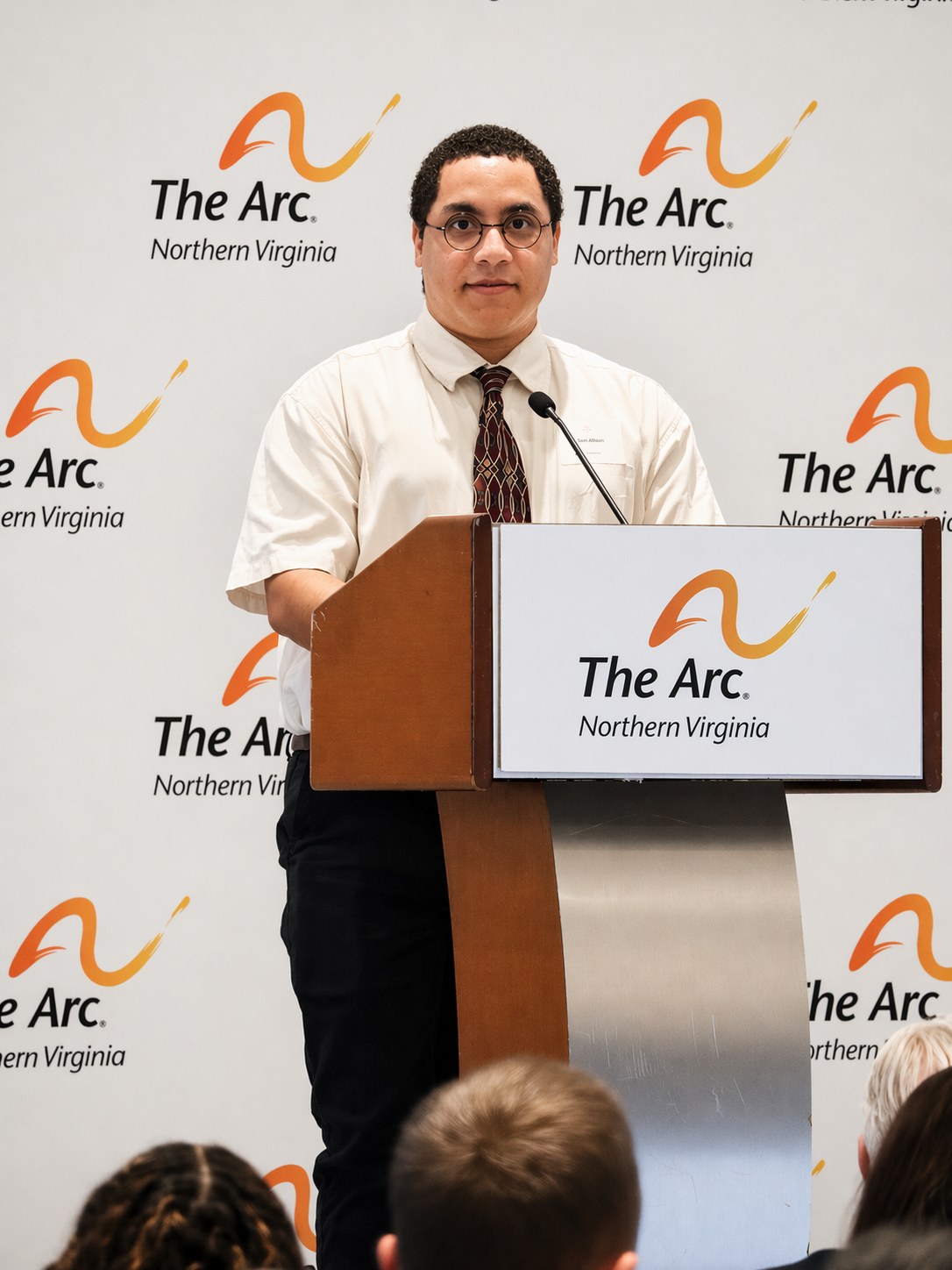
Ian Allan
Self-Advocate for The Arc of Northern Virginia