Introduction
Language is among humanity’s most enduring inheritances. It is transmitted across generations not merely as a collection of words, but as a repository of cultural memory, institutional practice, and social expectation. Every society develops a lexicon through which difference is interpreted, categorized, and communicated, and disability has long occupied a particularly complex position within that evolving vocabulary.
Consequently, conversations surrounding disability language are seldom confined to semantics alone. They reveal broader questions concerning identity, authority, history, and the paradigms through which human variation is understood.
Within the disability community, disagreements over terminology are often portrayed as evidence of generational division or ideological conflict. Such characterizations, however, overlook a more nuanced reality. Language does not emerge in isolation; it is shaped by prevailing medical frameworks, educational systems, legal codification, cultural narratives, and the lived experiences of those who both employ and challenge it. A term regarded by one generation as respectful may be perceived by another as antiquated, while language once considered progressive may later be reconsidered through the lens of self-advocacy and disability justice. These shifts should not necessarily be interpreted as contradictions, but rather as reflections of an evolving understanding of disability itself.
My own experience illustrates this progression. I have been formally diagnosed on three separate occasions: first at the age of two, again at eighteen, and most recently at twenty-six. Although I remained the same individual throughout each evaluation, the clinical paradigms, diagnostic criteria, and broader societal conversations surrounding autism continued to evolve. Each diagnosis therefore represented not only an assessment of my neurological profile, but also a snapshot of the historical moment in which it occurred. In many respects, every diagnosis tells two stories simultaneously: one about the individual, and another about the era in which that individual is being understood.
This essay does not seek to prescribe a definitive vocabulary for disability. Rather, it offers an examination of how language evolves across generations, how neurotypical norms have historically shaped disability discourse, and how greater mutual understanding may emerge through intellectual humility, collective access, and an enduring commitment to dialogue.
Language as a Living System
Language is often perceived as a stable instrument of communication, yet its history suggests otherwise. Far from constituting a fixed system of definitions, language functions as a living social phenomenon; continually adapting to cultural transformation, scientific discovery, and evolving understandings of human experience. Words acquire new meanings, relinquish old associations, and occasionally become sites of contestation as communities renegotiate the values they wish their vocabulary to embody. Disability language exemplifies this process with particular clarity, reflecting not only changes in terminology but also shifts in the philosophical assumptions that underlie society’s conception of disability itself.
The evolution of disability-related language is neither arbitrary nor merely stylistic. It is influenced by the interrelationship between medical scholarship, public policy, jurisprudence, education, advocacy, and the lived phenomenology of disabled individuals. Each domain contributes to the codification of terminology that, over time, shapes public discourse and institutional practice. Yet codification should not be mistaken for permanence. Every linguistic framework remains subject to revision as new knowledge emerges and as disabled people increasingly participate in defining the language that describes their own experiences.
This dynamic illustrates an important distinction between language about disability and language from disability. Historically, much of the vocabulary surrounding disability originated within institutions, medical, legal, educational, or charitable.
Disabled individuals were more often the subjects of classification than active participants in its construction. Contemporary disability advocacy has increasingly challenged this paradigm by emphasizing self-determination, community engagement, and the legitimacy of lived experience as a source of knowledge. Consequently, language has become not only a means of description but also a medium through which autonomy and identity are negotiated.
Recognizing language as a living system also invites intellectual humility. No generation possesses a definitive or immutable lexicon, nor should linguistic evolution be interpreted as evidence that previous generations acted in bad faith. More often, changes in terminology reflect expanding understandings of disability, informed by new research, shifting cultural narratives, and the growing prominence of disabled voices within public discourse. To inherit language, therefore, is not merely to preserve it unchanged, but to examine it critically, refine it thoughtfully, and ensure that it remains responsive to the communities it seeks to represent.
The Medical Paradigm and the Legacy of Classification
To understand why disability language varies across generations, it is first necessary to examine the historical paradigms from which that language emerged. Terminology does not develop independently of the institutions that employ it. Rather, it is shaped by prevailing assumptions regarding health, education, productivity, and citizenship. For much of modern history, disability was understood principally through a medical paradigm that sought to identify, classify, and remediate perceived impairments.
Within this framework, diagnostic terminology served an important clinical purpose, enabling professionals to establish shared definitions, facilitate research, and determine eligibility for services. Yet the same process of classification also contributed to a broader cultural lexicon that frequently emphasized deficit over difference.
This observation should not be interpreted as a wholesale repudiation of medical practice. Clinical assessment remains indispensable for many disabled individuals, providing access to diagnoses, accommodations, therapies, and legal protections that might otherwise remain inaccessible. My own experiences underscore this reality.
Having been evaluated at three distinct stages of life, at two years old, eighteen, and twenty-six, I recognize the practical importance of diagnostic language. Each evaluation expanded my understanding of myself while opening pathways to support that would have been difficult to obtain without formal recognition. At the same time, those assessments reflected the evolving clinical paradigms of their respective eras, illustrating that diagnostic frameworks are themselves products of historical development rather than immutable truths.
As disability rights movements gained prominence throughout the latter half of the twentieth century, alternative paradigms began to challenge the exclusive authority of medical interpretation. The social model of disability redirected attention toward environmental barriers, inaccessible systems, and societal exclusion, arguing that disability is shaped as much by external conditions as by individual impairments. More recently, perspectives grounded in neurodiversity and disability justice have further expanded this discourse, emphasizing self-determination, interdependence, and the legitimacy of diverse cognitive and physical experiences. These paradigms do not reject medicine outright; instead, they broaden the conversation by recognizing that clinical language represents only one dimension of a far more complex human reality.
Consequently, disagreements over terminology often reveal less about individual intentions than about the historical frameworks through which disability has been understood. Words carry the imprint of the paradigms that produced them, and each generation inherits not only a vocabulary but also a distinct conception of what disability itself signifies.
Generational Memory and Why People Speak Differently
Generational differences in disability language are often interpreted as evidence of ideological polarization. While disagreements undoubtedly exist, such an interpretation risks overlooking the sociohistorical contexts in which language is acquired. Individuals do not simply choose a vocabulary in isolation; they inherit linguistic conventions through families, schools, healthcare systems, workplaces, legal institutions, and cultural narratives. Consequently, the words people use to describe disability frequently reflect the historical moment in which they first learned to understand it.
For many older adults, disability was introduced through a framework in which diagnosis was closely associated with institutional care, charitable assistance, or medical intervention. Educational opportunities were comparatively limited, public visibility of disabled individuals was constrained, and self-advocacy organizations had yet to achieve widespread influence. Within that context, terminology now regarded by some as outdated or paternalistic was often presented as respectful, professional, or even progressive. Evaluating those linguistic choices solely through contemporary standards risks overlooking the circumstances in which they emerged and the intentions that often accompanied them.
Conversely, younger generations have come of age during a period shaped by disability rights legislation, inclusive education, digital communities, and the expanding influence of disabled scholars, advocates, and content creators. The proliferation of online platforms has enabled disabled individuals to articulate their own experiences directly, challenging longstanding assumptions regarding authority and expertise. As a result, contemporary discussions increasingly emphasize self-identification, community preference, and the recognition that disabled people are not merely subjects of professional discourse but active participants in shaping it. This shift has contributed to a more pluralistic linguistic landscape, one in which multiple perspectives frequently coexist rather than converge.
These differing historical experiences help explain why conversations about disability language can become unexpectedly contentious. Participants are often drawing upon distinct memories of what constituted respectful communication within their own social and institutional environments. Recognizing this dynamic does not require abandoning critical reflection, nor does it suggest that every term should be preserved indefinitely. Rather, it encourages an interpretive posture grounded in intellectual humility; one that distinguishes between deliberate prejudice and inherited vocabulary, and that approaches dialogue not as an opportunity to assign blame but as a means of cultivating mutual understanding across generations.
Neurotypical Narratives and the Hegemony of Normalcy
Language not only reflects society’s understanding of disability; it also reveals whose perspectives have historically been afforded the greatest authority in defining it. For centuries, disability discourse has been shaped predominantly through neurotypical and non-disabled frameworks that established normative standards for cognition, communication, behavior, and social participation. These standards, often presented as objective or self-evident, have functioned as a form of cultural hegemony, establishing implicit expectations regarding what constitutes “normal” human experience while positioning deviation from those expectations as a condition requiring explanation, intervention, or correction.
The influence of this normative paradigm extends beyond clinical diagnosis into the subtle architecture of everyday communication. Descriptive phrases such as high-functioning, low-functioning, mild, or severe frequently appear straightforward, yet they often privilege external observation over lived experience. Such classifications tend to evaluate individuals according to how closely their behaviors align with neurotypical expectations rather than acknowledging the complexity and variability of support needs, adaptive strategies, or environmental contexts. A person who communicates fluently in one setting may encounter profound barriers in another; similarly, someone perceived as highly independent may simultaneously require substantial forms of support that remain largely invisible to outside observers. Human experience rarely conforms to binary classifications, even when institutional language suggests otherwise.
This observation does not imply that descriptive language should be abandoned altogether. Rather, it invites greater precision and reflexivity in how such language is employed. The phenomenology of disability, the lived experience of navigating environments, relationships, and institutions, often resists simplistic categorization. Consequently, terminology that appears administratively efficient may fail to capture the dynamic and relational nature of disability as it is actually experienced. Language that serves bureaucratic purposes is not necessarily synonymous with language that fosters understanding.
Recognizing the influence of neurotypical norms therefore requires more than revising isolated words. It calls for examining the assumptions embedded within the paradigms that produce those words and questioning whose perspectives have historically shaped their meaning. As disabled individuals increasingly participate in scholarship, policymaking, and public discourse, the conversation expands beyond replacing one lexicon with another. Instead, it becomes an ongoing process of redistributing epistemic authority, acknowledging that those who live disability each day possess indispensable insight into the language that seeks to describe their experiences.
Beyond the Person-First vs. Identity-First Binary
Few discussions within disability discourse have received as much sustained attention as the distinction between person-first and identity-first language. Expressions such as person with autism and autistic person have become emblematic of broader conversations concerning dignity, identity, and self-representation. While these linguistic preferences are often presented as mutually exclusive, such a binary risks oversimplifying a discourse that is, in practice, considerably more nuanced.
Person-first language emerged largely from efforts to affirm the humanity of disabled individuals at a time when disability frequently eclipsed personhood in public perception and institutional practice. By placing the individual before the diagnosis, advocates sought to resist reductionist assumptions and emphasize that disability constituted one aspect of a multifaceted human identity. Conversely, many disabled people, including a significant number within the autistic community, have embraced identity-first language as an affirmation that disability is neither incidental nor detachable, but an integral dimension of their lived experience. For these individuals, identity-first language reflects acceptance rather than limitation.
Neither perspective, however, possesses universal applicability. Disability communities are remarkably heterogeneous, encompassing diverse cultures, histories, communication styles, and philosophical outlooks. Preferences may differ not only between disability communities but also among individuals who share the same diagnosis. Consequently, linguistic respect cannot be reduced to adherence to a single convention. It is better understood as an ongoing practice of listening, asking, and responding with humility rather than assumption.
Perhaps the more consequential question is not whether one linguistic formulation should prevail over another, but whether our communicative practices remain sufficiently flexible to honor individual agency. When language becomes prescriptive rather than dialogical, it risks reproducing the very dynamics of authority that disability advocacy has long sought to challenge. Mutual understanding is seldom achieved through rigid adherence to terminology alone; it emerges through genuine engagement with the people whose experiences that terminology seeks to represent.
Disability Justice, Collective Access, and the Ethics of Listening
If language possesses the capacity to shape perception, then conversations surrounding disability must extend beyond vocabulary to encompass the ethical responsibilities that accompany communication itself. Disability justice offers such a framework by shifting attention away from individual linguistic correctness and toward the broader conditions that enable participation, belonging, and equitable engagement. Within this paradigm, accessibility is understood not as a discrete accommodation or procedural obligation, but as a collective practice grounded in interdependence, reciprocity, and the recognition that every individual both contributes to and benefits from inclusive communities.
This perspective challenges the assumption that communication is solely the responsibility of the disabled individual. Historically, disabled people have often been expected to adapt continuously to neurotypical norms; modifying speech, suppressing natural behaviors, translating their experiences into socially acceptable forms, or masking aspects of their identities in order to reduce misunderstanding. While adaptation is an inevitable component of human interaction, disability justice questions why the burden of accommodation has so frequently been distributed asymmetrically. Genuine accessibility requires a reciprocal willingness to meet one another within the interstices of differing communication styles, lived experiences, and cultural expectations.
Throughout my own journey as a self-advocate, writer, and participant in disability policy discussions, I have come to appreciate that the most meaningful conversations rarely begin with agreement over terminology. They begin with curiosity. Whether engaging with fellow self-advocates, parents, educators, clinicians, or policymakers, I have encountered individuals whose vocabularies differ considerably from my own, often because their experiences with disability emerged from different historical, professional, or personal contexts. Those conversations have reinforced an enduring lesson: understanding is cultivated less through linguistic perfection than through the willingness to listen before seeking to persuade.
Anti-ableist practice, therefore, is not merely the rejection of outdated terminology. It is the continual examination of the assumptions that shape our interactions and the conscious effort to construct communicative environments in which disabled people are recognized not simply as recipients of accommodation, but as equal participants in defining the language, policies, and cultural narratives that influence their lives. In this sense, collective access is both a practical commitment and an ethical aspiration; one that acknowledges communication as a shared responsibility rather than an individual burden.
Conclusion
The language we inherit is never neutral. It carries the imprint of the institutions that codified it, the generations that normalized it, and the communities that have challenged, reshaped, and reclaimed it. As our understanding of disability continues to evolve, so too will the vocabulary through which we seek to describe it. This evolution should not be regarded as evidence of instability or contradiction, but as an affirmation that language remains responsive to human experience rather than fixed in perpetuity.
Perhaps the most enduring lesson is that conversations about disability language are seldom concerned solely with words. They are, at their core, conversations about recognition, dignity, authority, and belonging. When viewed through this broader lens, generational differences become less a source of division than an opportunity to understand how historical contexts, institutional paradigms, and lived experiences have shaped differing perspectives. Mutual understanding does not require complete linguistic consensus; it requires a shared willingness to listen with intellectual humility, to remain receptive to evolving perspectives, and to recognize that no single lexicon can encompass the plurality of disabled experience.
As someone whose life has been framed by three diagnoses across three distinct periods of my life, I have come to appreciate that while diagnostic terminology may change, the humanity of the individual does not. The language through which I have been understood has evolved alongside medicine, education, advocacy, and society itself. Yet what has remained constant is the aspiration to be recognized not merely through the vocabulary that describes me, but through the fullness of my lived experience.
If this article offers a single proposition, it is this: language is at its most meaningful not when it reaches finality, but when it remains open to dialogue. The words we inherit may shape our understanding of disability, but the conversations we choose to have, and the humility with which we engage them, will shape the language that future generations inherit in return.
Note of Thanks
I wish to extend my sincere gratitude to the countless self-advocates, family members, educators, clinicians, researchers, policymakers, and allies whose perspectives have informed my understanding of disability, identity, and language. Whether through collaboration, thoughtful disagreement, or shared reflection, each conversation has reinforced the importance of approaching disability discourse with intellectual humility and mutual respect. It is my hope that this essay contributes, in some small measure, to an ongoing dialogue grounded not in the pursuit of linguistic perfection, but in the collective pursuit of understanding, access, and human dignity.
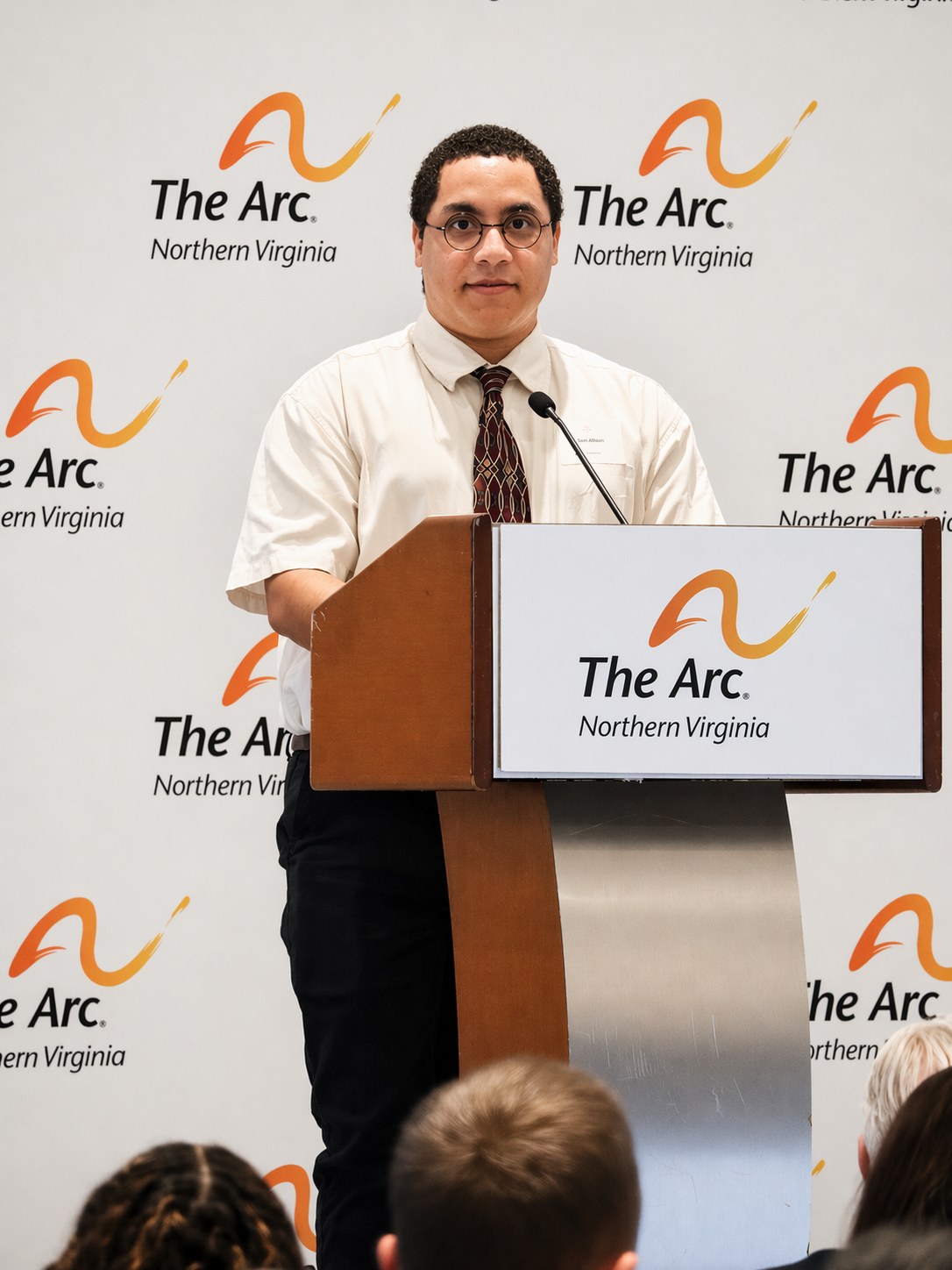
Ian Allan
Self-Advocate for The Arc of Northern Virginia