Opening: Framing Language as Infrastructure
Language is often treated as a passive medium for expression, yet its social life suggests something closer to infrastructure: an organizing system through which hierarchies of legibility, value, and belonging are quietly maintained. The re-emergence of the “R-word” (a historically ableist slur) in contemporary discourse does not function merely as a lexical recurrence; it signals the persistence of older epistemic arrangements in which difference is rendered intelligible through diminution.
To examine this phenomenon is not simply to track offensive language, but to interrogate the codification of social perception itself: how certain utterances become normalized within specific interstices of everyday speech, while simultaneously carrying the weight of institutional histories that exceed individual intent. The question is not only what is said, but how meaning becomes sedimented across time, policy, and repetition.
Contextual and Historical Layer: Codification and Hegemony
The genealogy of this term is inseparable from broader regimes of classification embedded within educational, medical, and bureaucratic systems. Historically, diagnostic vocabularies and school-based labeling practices contributed to a framework in which intellectual and developmental disability were not merely described but hierarchically ordered. Within this structure, language operated as a mechanism of codification, transforming lived variability into administratively legible categories that often carried implicit value judgments.
Hegemonic discourse reproduces itself not only through formal institutions but through vernacular absorption. The term circulates across informal settings, classrooms, peer groups, and familial exchanges, where it acquires a performative function: shorthand for deviation from normative behavior, disciplinary alignment, or social exclusion. In this sense, the word becomes less an anomaly than a normalized instrument of structural exclusion, embedded within everyday linguistic practice.
Spatial stigma further complicates this dynamic. Certain educational environments, particularly segregated or resource-tiered classrooms, become sites where language and classification converge. Within these spaces, identity is often mediated through labels that precede the individual, producing a phenomenological condition in which one’s sense of self is filtered through externally imposed categories.
Analytical Core: Narrative Production and Institutional Meaning-Making
Contemporary narratives around the term oscillate between two reductive poles: its framing as either harmless colloquialism or unequivocal moral transgression. Both positions, however, risk obscuring the structural processes through which such language is sustained.
Media discourse frequently abstracts the term from its institutional origins, recasting it as an issue of individual etiquette rather than systemic reproduction. Educational systems, meanwhile, may acknowledge its inappropriateness while failing to fully address the historical architectures that produced its circulation in the first place. In this gap between acknowledgment and transformation lies a set of interstices where harmful linguistic norms persist unchallenged.
From a disability justice perspective, this dynamic reveals a deeper tension between independence-oriented frameworks and those grounded in interdependence. The harm of such language is not solely located in interpersonal encounters but in the environmental conditions that allow certain descriptors to persist as socially intelligible. Collective access, in this sense, includes not only physical or institutional accessibility but also narrative accessibility, the capacity for communities to be represented without recourse to diminutive or pathologizing shorthand.
Lived Experience: Phenomenology of Linguistic Encounter
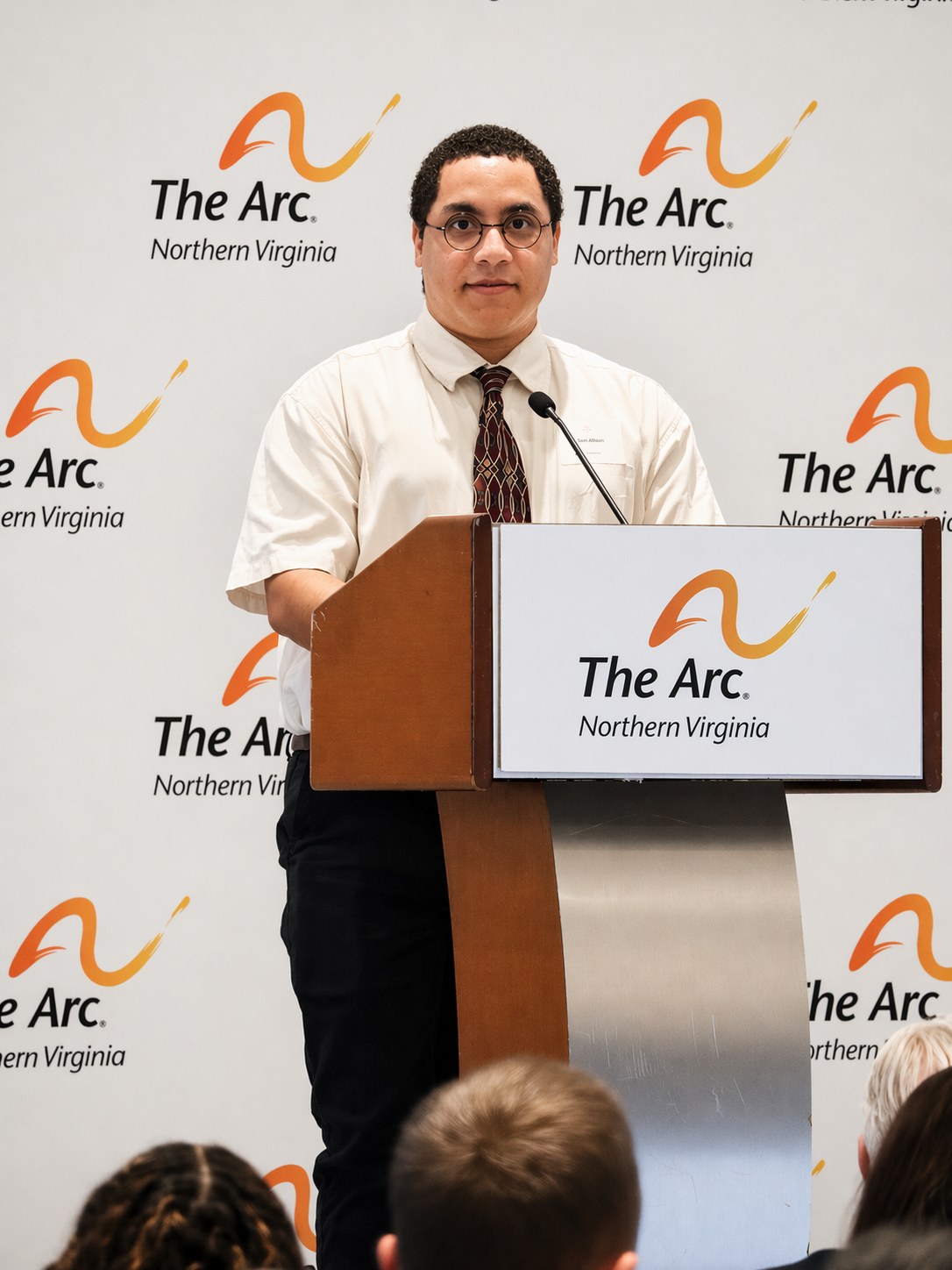
Within my own experience, exposure to this term was not incidental but structurally embedded in educational and social environments. It appeared not only in peer interaction but also in the implicit vocabulary of classification used within classrooms, where it functioned as both a warning and boundary marker. To hear it was often to register, simultaneously, an external judgment and an anticipated spatial repositioning, who was considered within normative proximity and who was not.
This encounter is not easily reducible to singular emotional response. Rather, it operates phenomenologically: as a repeated awareness of how language organizes social space in real time. Over time, the word becomes less an isolated utterance and more a signal embedded in a broader system of recognition and exclusion.
- Critical Reflection: Beyond Binary Moralization
The persistence of this term in contemporary speech is often interpreted through binary moral frameworks: acceptable versus unacceptable language, awareness versus ignorance. Yet such binaries risk flattening the complexity of how linguistic habits are produced and maintained.
A more precise analysis requires acknowledging that language is neither purely voluntary nor entirely determined. It emerges through repetition, social reinforcement, and institutional absence. To reduce its usage solely to individual intent is to overlook the distributed nature of linguistic hegemony.
At the same time, it is equally insufficient to treat all usage as equivalent. Context, power, and positionality shape the effects of language in ways that resist uniform interpretation. The challenge lies in maintaining analytical precision without collapsing into either moral absolutism or relativistic neutrality.
Conclusion: Toward Narrative Responsibility and Interdependence
To examine the return of the “R-word” is ultimately to confront the durability of older classificatory systems within contemporary speech. Its persistence suggests not only a linguistic residue but a broader structural continuity in how difference is narrated, organized, and perceived.
A disability justice framework reframes this issue away from individual correction and toward collective responsibility for the environments in which language acquires meaning. Interdependence, in this context, is not an abstract ethical ideal but a material condition: the recognition that linguistic ecosystems shape access, dignity, and social participation.
There are no definitive conclusions to this inquiry. Meaning remains contingent, negotiated within shifting interstices of history, institution, and lived experience. What remains possible, however, is a sustained attentiveness to how language constructs the conditions under which certain lives become legible, and others are rendered peripheral.
Note of Thanks
A note of thanks is warranted to those who have, across time and context, engaged this subject not as an abstraction but as a lived concern within shared environments of education, advocacy, and everyday interaction. This includes peers, educators, and members of disability communities whose conversations, formal and informal, have contributed to a more textured understanding of how language circulates through institutional and social space.
It is also important to acknowledge those who have worked, often within constrained systems, to reframe discourse toward accessibility, interdependence, and more expansive models of participation. Their efforts do not resolve the structural tensions described here, but they do complicate them in ways that make further inquiry possible.
Ian Allan
Self-Advocate for The Arc of Northern Virginia