Introduction: The Mythos of Proximity
Small communities are often romanticized as sites of intimacy, cohesion, and social legibility spaces in which proximity is presumed to yield understanding. Yet such assumptions often obscure a more complex sociological and phenomenological reality: that closeness does not necessarily equate to accessibility, and familiarity does not guarantee inclusion.
The “village,” as both metaphor and material structure, frequently operates as a microcosm of broader hegemonic paradigms. Within its boundaries, norms are not merely expressed but quietly codified, rendered natural through repetition, ritual, and unexamined continuity. It is within this codification that certain bodies, minds, and modes of being are either seamlessly integrated or subtly excluded.
This piece interrogates the “microbubble” phenomenon: the formation of tightly bounded social worlds in which dominant narratives of neurotypicality and able-bodiedness are reinforced through everyday interaction, often without explicit articulation.
Microbubbles as Social and Cognitive Structures
A “microbubble” may be understood as a socially enclosed epistemic environment wherein interpretive frameworks become self-reinforcing. In such spaces, divergence is not always actively rejected; rather, it is rendered invisible through structural omission.
Within small communities, these microbubbles are intensified by repetition of interaction. Individuals encounter one another not as strangers, but as recurring presences whose roles become fixed within a shared social script. Over time, this produces a form of social shorthand efficient, but also reductive.
For disabled and neurodivergent individuals, this shorthand can become a site of epistemic friction. Behavioral variance is often interpreted through neurotypical paradigms that assume uniformity of cognition, communication, and affect. The result is a subtle but persistent dissonance between lived experience and communal expectation.
Neurotypical Normativity and the Codification of Belonging
Neurotypical norms are rarely explicit; they are instead embedded within institutional and interpersonal expectations. In small communities, these expectations become more pronounced due to their informal codification through repeated social contact.
Belonging, in this sense, is not merely relational; it is procedural. It is contingent upon one’s ability to perform intelligibility within dominant communicative paradigms.
Those who do not conform are not always excluded outright, but may instead occupy interstitial positions: present yet unrecognized, visible yet misread.
This process reveals a quiet but pervasive mechanism of social hegemony. What is considered “normal” is not an objective category but a locally stabilized agreement, reinforced through repetition and lack of structural challenge.
Disability, Interdependence, and the Limits of Individualized Belonging
Disability justice frameworks challenge the assumption that belonging is an individual achievement rather than a collective responsibility. Within microbubbles, however, belonging is often framed as assimilation into preexisting norms rather than a reconfiguration of those norms themselves.
From a disability justice perspective, interdependence is not an exception to autonomy but its foundational condition. Yet small communities frequently valorize self-sufficiency narratives that obscure this reality. The paradox emerges when those most in need of adaptive collective structures are instead expected to self-adapt to static environments.
In this sense, exclusion is rarely loud. It is instead procedural, ambient, and embedded within the everyday architecture of interaction.
A Personal Reflection: Navigating the Interstices
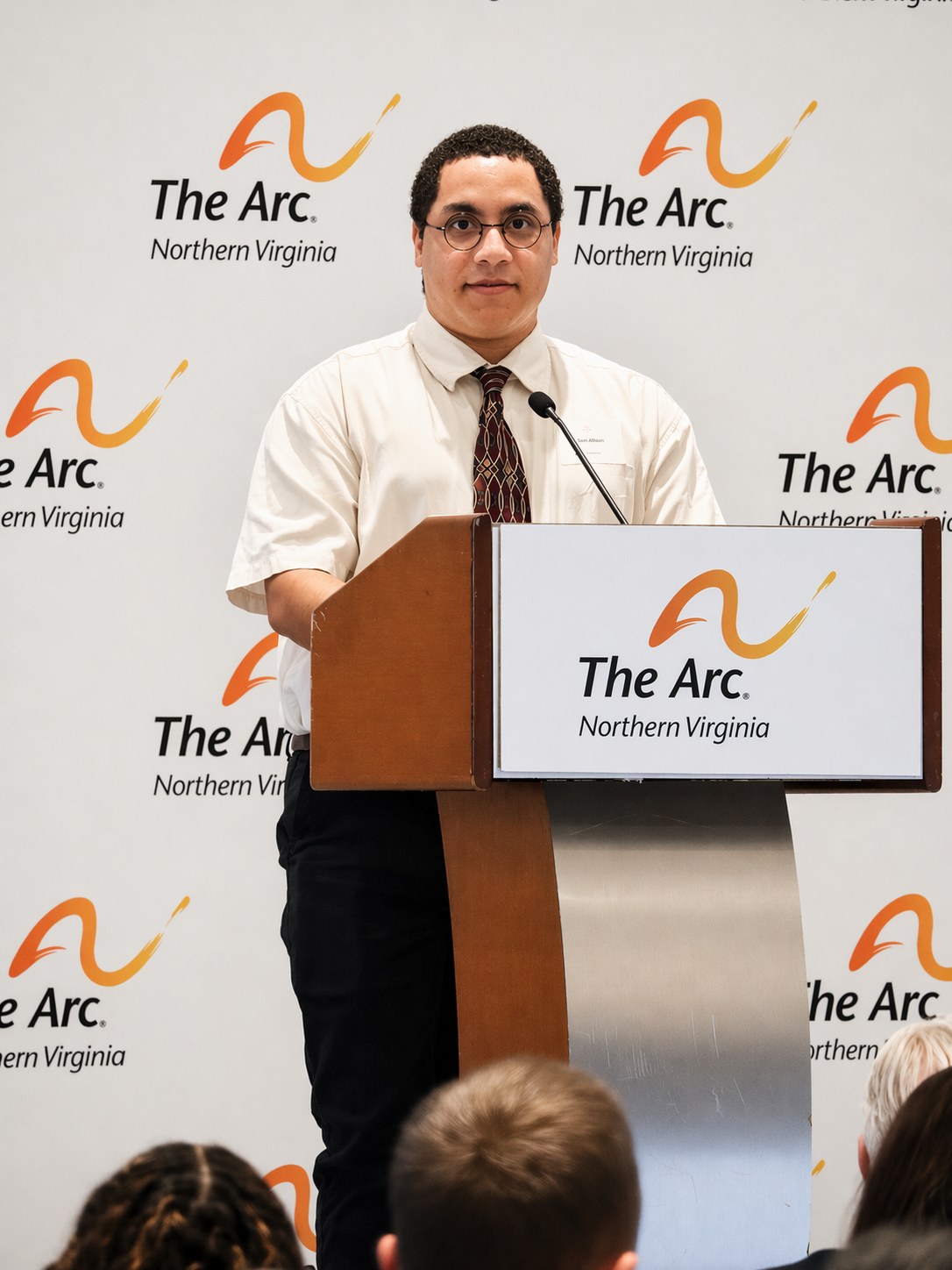
As someone engaged in disability advocacy and systemic navigation within community frameworks, I have observed how these microbubbles operate not only at the structural level but also at the intimate scale of interpersonal recognition.
There is a particular phenomenology to existing in such interstices; spaces where one is simultaneously acknowledged and misunderstood, present but not fully integrated into the social imagination of the community.
What emerges is not simply alienation, but a form of cognitive dissonance between internal coherence and external interpretation. One’s identity becomes filtered through interpretive paradigms that are not of one’s own making, but rather inherited from the dominant social order.
To exist within such conditions is to continuously negotiate visibility, neither fully outside nor fully within the microbubble, but suspended in its permeable boundaries.
Toward an Affirmative Paradigm of Access
Reimagining small communities requires more than inclusion in the traditional sense. It demands a reconfiguration of the underlying epistemic assumptions that define belonging itself.
An affirmative architecture of access would reject the notion that individuals must conform to preexisting norms to participate fully. Instead, it would recognize variability as foundational rather than exceptional.
Such a paradigm shift would require dismantling the quiet codifications that sustain exclusionary norms, replacing them with frameworks grounded in interdependence, flexibility, and interpretive plurality.
Only then can the “village” transcend its microbubbles and become a genuinely pluralistic social ecology.
Conclusion: The Village Reconsidered
The village, as both metaphor and structure, is not inherently exclusionary. However, without critical interrogation, it risks reproducing the very hegemonies it is often assumed to resist.
Microbubbles emerge not from malice, but from unexamined continuity. It is precisely this subtlety that renders them so resilient. To dismantle them requires sustained attentiveness to the ways in which norms are quietly produced, circulated, and naturalized.
In the end, the question is not whether we belong to the village, but whether the village is willing to reconstitute itself in ways that can hold the full phenomenological breadth of its residents.
Note of Thanks
I extend sincere appreciation to the disability community, self-advocates, caregivers, and scholars whose lived experiences and theoretical contributions continue to illuminate the structural contours of access and exclusion. Their work, whether articulated in formal discourse or embodied in daily negotiation, serves as a critical counterpoint to dominant paradigms of normativity.
This piece is also informed by ongoing dialogues within advocacy spaces that challenge ableist codification and seek to expand the interpretive boundaries of belonging. I remain deeply grateful for the collective labor, visible and invisible, that sustains these efforts toward a more equitable social imagination.
Ian Allan
Self-Advocate for The Arc of Northern Virginia